
Play The Long Game: The Career Lesson I Took From Manu Sai Bhakshi

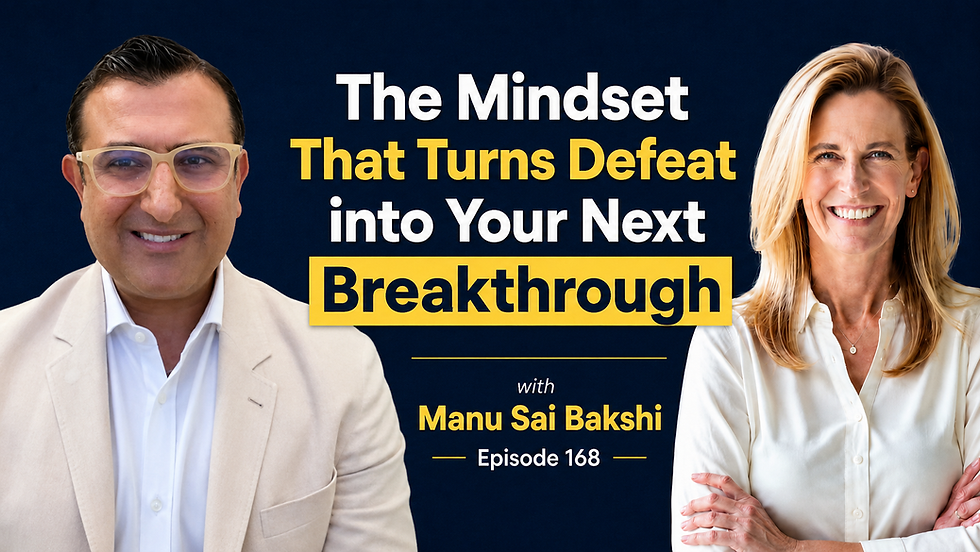
The best opportunities often come from relationships you built long before you needed them.
There’s something about Manu Sai Bhakshi’s career story that stayed with me after our conversation.
It isn’t just that he went from arriving in New York with $2,500, struggling to find a job, and eventually building a career in hedge fund recruiting and talent advisory.
It’s how he did it.
He played the long game.
And in a world where we’re constantly being told to move faster, build our personal brand, maximize our network, and find the next opportunity, I think there’s something powerful in remembering that some of the most valuable things in a career take years to compound.
The Opportunity You Want May Start Years Before You Need It
When Manu first arrived in New York, he had a degree in human resources and experience at IBM. But recruiters told him he didn’t have “New York experience.”
So he took whatever work he could find, including a temporary recruiting job at Macy’s, until he eventually landed in technology recruiting.
Once he got there, he noticed everyone was doing roughly the same thing: searching databases, sending resumes, and competing for the same placements.
So he did something different, and he picked up a phone.
He started cold calling people. He asked them to meet him. He spent money he didn’t really have to sit across from people and build relationships.
He wasn’t thinking only about the placement in front of him. He was thinking about the relationship that might still matter years later. He knew that mattered.
That very mindset became one of the defining themes of his career.
At one point, Manu had a candidate who received a multimillion-dollar offer but ultimately turned it down. He could have viewed that as a lost fee.
Instead, he took the candidate to dinner.
Years later, that relationship had grown into a friendship, a new team he helped build, and eventually a hedge fund that Manu invested in.
As he put it, “the point is never the fee. The point is success.”
That is what playing the long game looks like.
Your Reputation Is Working When You Aren’t
One of the things I talk about often at Leap is the hidden market. So many meaningful career opportunities never become job postings. They begin with a simple but meaningful conversation. This may include answering pivotal questions, such as:
Who do you know?
Who would you trust?
Who should we talk to?
Manu’s career is a great example of why those conversations matter.
He built a reputation for knowing the market, understanding talent, giving honest advice, and genuinely caring about the people he worked with. Eventually, a hedge fund founder approached him about joining the firm. This was not because Manu had applied for the job, but because of the reputation he had built through his work.
That’s the part I think many accomplished professionals underestimate.
Your reputation is creating opportunities long before you can see them.
Every person you help. Every relationship you nurture. Every time you tell someone the truth instead of simply telling them what they want to hear.
It all adds up.
Then Comes the Hard Part: Betting on Yourself
Eventually, Manu left the hedge fund and started his own firm.
And something happened that I think many people experience during a career transition but don’t always talk about.
Some of the phone calls stopped being returned.
The people who had called him when he held a powerful position weren’t necessarily as quick to call when he no longer occupied that seat.
That realization can be humbling, but it can also be clarifying.
Because it forces you to ask: What part of my reputation belongs to me, and what part belongs to the position I hold?
For Manu, the answer became clear over time. The relationships that were real remained. And he built from there.
He started his firm during COVID, when even basic in-person relationship building was difficult. It was uncertain and scary, but he kept going.
His advice is simple:
Believe in yourself. Know your limitations. Take the risk when you know it’s the right one.
And perhaps most importantly, don’t confuse a setback with proof that you’re on the wrong path.
What Are You Building That Will Matter Five Years From Now?
This is the question I would take from my conversation with Manu.
Not:
What can I get right now?
But:
What am I building that will still matter years from now?
Are you building relationships or collecting contacts?
Are you building trust or simply increasing visibility?
Are you becoming known for something meaningful, or simply staying busy?
Are you investing in the reputation you want to carry into your next chapter?
Because careers are rarely built in one big leap.
They’re built through hundreds of decisions that seem small at the time.
It may be a conversation you chose to have or a person you helped when you didn’t need anything from them.
It may be a risk you took before you felt completely ready, or maybe it was a relationship you continued to nurture after the immediate opportunity was gone.
Those things compound.
And eventually, someone says:
“You should meet this person.”
That’s when you realize the long game was working all along.
A Few Questions to Consider
How do you build a strong professional reputation?
By consistently creating value, giving honest advice, following through, and investing in relationships before you need anything from them.
Why does networking matter for career growth?
Because many opportunities begin through trusted relationships and referrals rather than traditional job applications.
How do you know when it’s time to take a career risk?
When you have enough evidence that you’re on the right path, even if the outcome isn’t guaranteed. Manu’s approach was not about eliminating fear—it was about believing in himself enough to move forward anyway.
What does it mean to play the long game in your career?
It means focusing less on immediate transactions and more on building expertise, trust, relationships, and a reputation that can create opportunities over time.


Comments