
Stacy Brown-Philpot
The Remarkable Story of Stacy Brown-Philpot Outgrowing Her Circumstances
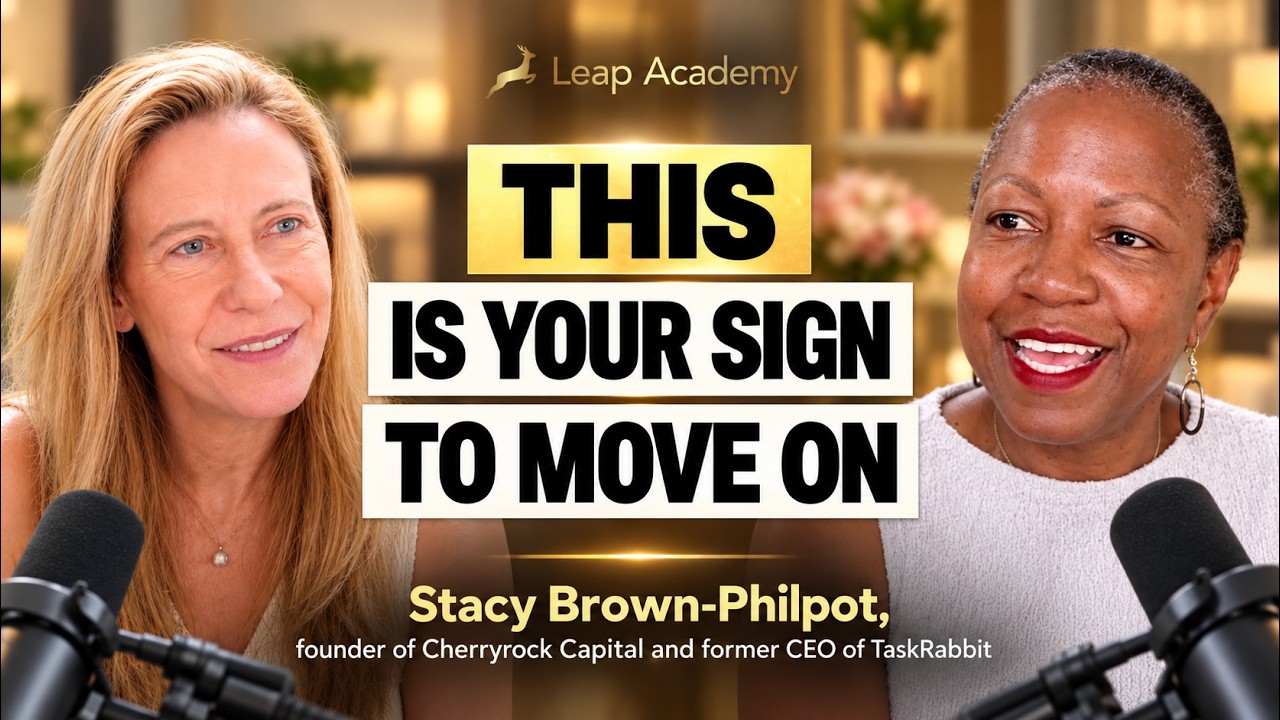
EPISODE #
174
In this episode...
Stacy Brown-Philpot met 366 people and companies over two years while raising her first venture fund. On average she met each of them six or seven times. 83 said yes, and Cherryrock Capital closed at $172 million.
She says it was hard and it took a lot longer than she expected. It was also the plan she had written down years earlier in her essay for Stanford, before a long detour through Google and TaskRabbit.
What she took from Detroit
Stacy grew up on the west side of Detroit. At one point the house held four generations of women: Stacy, her mom, her grandmother and her great grandmother. She was the youngest of seven people living there.
Her mom talked constantly about education. What you learn, nobody can take away from you. Stacy says that is why the pace of technology today excites her. If you know how to learn, you can adapt.
The detour that became a career
She studied accounting at Wharton, got her CPA in public accounting and worked in mergers and acquisitions at Goldman Sachs before going to Stanford business school. Her plan was to become a venture capitalist. Someone told her a good investor needs operating experience, so she went to Google to get it. She stayed almost ten years, and Google grew from about 1,000 people to 50,000 while she was there.
Her first team was 14 people in finance. Then she was asked to run a team of 200 in operations, a function she didn't know. She says managing managers is a step change. Less of the job is execution, and far more of it is strategy and people.
Hire your replacement
Sheryl Sandberg worked closely with Stacy at Google and kept asking her the same question. Have you hired your replacement? Stacy kept hiring people who were very good at their jobs but were never going to take hers.
Her point is that you can't move up until someone can step into your role, and that means being humble enough to hire people who know more than you about something. When she finally did it, the 200 person operations role came up. She says there was no way she could have taken it otherwise.
Saying yes to India
Google needed someone to run its India office for a while and hire the permanent leader. Stacy's first answer was no, because she and her husband Chris were thinking about starting a family. At home, Chris asked why she wouldn't go. She had always wanted to live abroad, and her company was going to pay for it.
She went for a year and went from leading 200 people to more than 1,000. At that size you can't know everyone's name. Her line for it is that repetition doesn't spoil the prayer, because someone is hearing your message for the first time even when you've said it 300 times.
From Google Ventures to TaskRabbit
By the time she left Google at the end of 2012, Stacy felt she was plateauing. Everyone came to her for answers, and she asked herself where her own learning had gone. She went to work with Google Ventures, where she could help its portfolio companies work with Google.
She had already met Leah, the founder of TaskRabbit. Eighteen months later she was in Leah's building visiting another portfolio company, so she messaged her and they had lunch. Leah told her TaskRabbit was looking for a COO. Stacy said she didn't want to drive to San Francisco, and she had a baby, Emma. Leah pushed back, and after a few more meetings Stacy joined.
How she got on the HP board
As COO she wanted a public company board seat, so she told everyone she knew. She met recruiters who were focused on getting more women onto boards and put together a board bio. A resume lists what you achieved, she says. A board bio frames what you know around what another organisation might care about.
The lead came from a conversation in a conference bathroom. Another woman asked what she was up to while they washed their hands, and when Stacy said she was interested in a public company board, the woman referred her to the recruiter for the HP board. She joined the HP board in 2015 and became TaskRabbit's CEO in April 2016.
The product change that cut revenue
TaskRabbit made a big product change. It dropped several categories and replaced bidding with the rate each tasker set, so clients could no longer negotiate but were guaranteed their task would get done. The company didn't tell anyone it was coming.
Clients and taskers were upset, a flaming TaskRabbit logo appeared online and revenue went down. Stacy did evening calls with angry clients and taskers. She kept coming back to the mission, which was to make everyday life easier for everyday people, and the team checked the metrics once a week. TaskRabbit returned to growth and was later sold to IKEA, where it launched in four new countries.
Raising Cherryrock Capital
Stacy was offered other CEO jobs after TaskRabbit. She went back to the plan from her Stanford essay instead and started raising a fund in 2023 to back under-invested founders. In her view the capital exists and the problem is access.
She wanted to lead Series A and B rounds, and that meant writing big cheques. So she built a portfolio construction model and worked back to a minimum fund size of $150 million. The investors who came in included Goldman Sachs, JP Morgan, MassMutual, the Ford Foundation and Bank of America.
The no's still hurt. Her daughter was in the back seat of the car for one of them, a third or fourth meeting with an institution that passed. Her daughter told her, "That's all right. You'll get the next one." Stacy says that became her attitude through all 366.
What she tells founders now
People told her she was going to the dark side. She says it's bright over there, and she reminds founders that venture capital is a finance job. A VC has taken other people's money and promised them a return. One of Cherryrock's values is delivering hard truths with kindness, so the firm tries to say no quickly and respectfully, with feedback.
Her advice is to find the investor that fits you. Cherryrock only invests in companies with product market fit at scale, so an early stage founder pitching them is pushing a rock up a hill. Ask every investor how they'll help you be successful, and if you aren't satisfied with the answer, they aren't the right source of capital for you.
What she'd tell her younger self
As a little girl she wanted to be a vet. When her dog died she cried and cried and decided she couldn't do it, and that took her toward business. Her message to that girl is that she's going to be okay.
We go through all of this in the full episode. Watch on YouTube or listen on Apple Podcasts or Spotify.


Full transcript (if you like reading instead of listening)
00:00 Stacy Brown-Philpot
Always a learner and always focus on your education regardless of what your circumstances are, and always learn something.
00:08 Ilana Golan
That's Stacy Brown-Philpot, founder of Cherryrock Capital and former CEO of TaskRabbit. But behind that career is a lesson Stacy learned. Long before Silicon Valley or Google.
00:20 Stacy Brown-Philpot
I had reached a point where I had a perfect so much there. And wait a minute. Where's my learning? And this goes back to my childhood and always learning new things and finding new things to do. So I decided it was time for me to move on.
00:36 Ilana Golan
So what do you do when the thing you worked so hard to achieve becomes the thing keeping you comfortable? In this episode, Stacy teaches us how to recognize when it's time to make your next leap, how to keep growing when you're already successful, how to lead to decisions that don't go to plan, and how to turn everything you've learned into an opportunity to create something bigger than yourself.
01:02 Ilana Golan
I'm Elana Golan and this is the Leap Academy podcast. Hey.
01:07 Ilana Golan
Before we start the show, I have a small favor to ask. One of the biggest things by far that you can do for us, and it's going to take you less than a second, is to click on that, like subscribe download buttons right now. This helps the show continue to bring amazing, amazing guests. And this small act of kindness right now will make a massive difference.
01:30 Ilana Golan
So can you do that quick right now? Just click that like subscribe download button and I promise I will personally make this the best show that I know how to make, and you won't regret it. Okay, now let's dive in. Stacy.
01:45 Ilana Golan
I'm so glad you're here.
01:47 Stacy Brown-Philpot
Thank you for having me.
01:48 Ilana Golan
So I'm going to take you back in time. And I want you to tell me, who is Stacy in Detroit. How did she grow up? Like, paint me that vision.
01:59 Stacy Brown-Philpot
Wow. You're taking me way back. I grew up on the west side of Detroit, as you mentioned, and a lot of my childhood was just navigating life. We had a house at one point with four generations of women. It was me, my mom, my grandmother, and my great grandmother. There were seven people who lived in that home, and my brother was there.
02:25 Stacy Brown-Philpot
My grandfather at one point and my uncle was also there. And so we just it was busy and I was the youngest. So I grew up as the youngest. I was also the, the the baby of like the family, the girl. And so protected a lot by my big brother. We get along very well now. We definitely had our early years when we played together.
02:47 Stacy Brown-Philpot
Teenagers was like, yeah, we go our separate ways and then we came back together. So we're very, very close now I we. It was a community that we lived in. A lot of people on the block that we lived in, that I lived on, took care of each other, looked out for each other. We had block parties in the summer and fire hydrants bursted and like we would run through them and in the winter was very cold and we'd get out there and shovel snow.
03:13 Stacy Brown-Philpot
And sometimes my brother and my uncle would go down the block and try to make money shoveling other people's snow. I never really had to shovel snow because I had a brother and a uncle who did. And so that was I was lucky to be the youngest, I guess, in that respect. I grew up with pets. I had dogs all my life and I love animals, so.
03:32 Ilana Golan
No. Me too. Oh, we just had to put down our dogs. So it makes me really sad.
03:38 Stacy Brown-Philpot
But that's how hard. Sorry.
03:42 Ilana Golan
Thank you.
03:42 Ilana Golan
But when you grow up like this and you started working kind of.
03:46 Ilana Golan
Early on and and.
03:48 Ilana Golan
And hassling and doing with thing, what, what do you feel it taught you. Now you're looking at retrospect. What do you feel are some of the big lessons that you were taking with you?
03:58 Stacy Brown-Philpot
One of the things I learned growing up was the value of education. And my mom always talked to us about the importance of learning and what you learn. No one can ever take away from you. And so always be a learner and always focus on your education, regardless of what your circumstances are. You can always learn something. And so I've always taken that with me.
04:22 Stacy Brown-Philpot
And you can look at the world today and see how fast the pace of technology is accelerating. But if you're a learner, it's exciting. It's not scary. It's nothing to be afraid of. You know how to learn. You know how to adapt to what you learn. That was something that we were taught. We were always taught to adapt to our circumstances.
04:43 Stacy Brown-Philpot
Never let your circumstances define you, but understand what they are and figure out how to make a way. And then we talked about we were taught about community and the community that you are in. Your your job is to play a role in that community and uplifting that community. And I teaching my kids to be productive members of society as parents.
05:01 Stacy Brown-Philpot
That's sort of what we're supposed to do. And we were taught that there's someone else who's hurting, you're hurting, and what can you do to help that person? So those are some values that I grew up with, that I've taken with me throughout my life and try to teach my children to.
05:16 Ilana Golan
Yeah. And I love these lessons. So first of all, just tap into that. I mean, I think today we're going to still go through your story, but if we jump into today, I mean, the world is all about adaptability right now and adaptability, if you think about it, it's learning, right? It's learning experimenting really, really fast. So this is for the listeners.
05:36 Ilana Golan
Like you're going to need to just be, like you said, a constant learner. This is not about there's not going to be one career ladder that you can just climb and chill, like you're just going to need to learn all the time. But I also love the community part, because I think when you are a part of a community, you understand that there's something greater than yourself.
05:56 Ilana Golan
Tell me, like, you know, it's some point and you went to some incredible schools, but, you know, I think you know, and correct me if I'm wrong, but I think one of the pivotal moments for you were also like when you had to go to Google India. And to me, that was fascinating to read about it, because that sounds so far off.
06:14 Ilana Golan
And why would you say yeah, yes or etc.. So, but take me to that. Take me to the journey until Google India. And what made you decide to say yes to this adventure?
06:27 Stacy Brown-Philpot
Well, going to Google India wasn't the first time that I was taken out of what was a normal environment and dropped into something completely different. When I left Detroit and went to college at Penn, I went from a community, a neighborhood that was mostly black to an Ivy League school that was not. And so, you know, 98% of the people I interacted with look like me to, you know, I think Penn at that time was 6 or 7% black.
06:54 Stacy Brown-Philpot
And so that was the first fish out of water experience that I had. And I.
06:59 Ilana Golan
Take me there for a second. Yeah. I want to hear more about this.
07:03 Stacy Brown-Philpot
It's incredible. Shocking. I was ready for a city that was Philadelphia because I grew up in a city of Detroit, so I was ready to be in a city, and I understood what an inner city was. But I wasn't ready for that culture shock of just getting to know people that didn't look like me and didn't come from different, you know, didn't come from the same background that I had different faves.
07:26 Stacy Brown-Philpot
My roommate was a Jewish woman, and she was so sweet and so kind. Freshman year, her mom would bring her food and I would she would bring enough for me. And, you know, I got to know lot of Jewish people like to provide food and they provide a lot of food for everyone. We love food. Yes, we do too.
07:46 Stacy Brown-Philpot
We have a lot more in common than we think. It was great.
07:49 Stacy Brown-Philpot
And so that is an example of how I learned. There's a lot of things that are different about how we might look, but our lived experiences are very similar. And I it opened me up to, to that world. So I did find my people at Penn. I joined a sorority, Delta Sigma Theta, and those women became, you know, lifelong sisters.
08:08 Ilana Golan
Was there two sides to this? Was there a good side and a bad side, too, or was it only you? Could you see only the good side? Like did you feel.
08:18 Stacy Brown-Philpot
I wouldn't say bad side, but there were challenging sides, like I was a time when we we when you start school, there's sort of the activity fair and you walk around and look at all the different clubs you can join. And I was in Wharton, so I was studying finance, and so I wasn't going to join that many activities because it was a very rigorous program.
08:39 Stacy Brown-Philpot
And so I'm walking around with the people from my dorm who looks like, you know, America, lots of different races. And I walked past the cheerleaders and they were handing out fliers, and they didn't give me one. They like, gave the girl in front of me one. They gave the girl behind me.
08:55 Stacy Brown-Philpot
They give me one. I was like, wait, what was wrong with me? I don't.
08:57 Stacy Brown-Philpot
Want to be a cheerleader. I was actually a majorette in high school, which in my opinion requires more skill because you have to actually turn of a ton. But you know, I have to with the cheerleaders if they want. About which one is harder. If you're doing flips, maybe you can compete with me, I don't know. But anyway, they never even considered that like I actually could do.
09:17 Stacy Brown-Philpot
I was on the pom pom squad, I could dance. They didn't know that about me. They just passed me over with the flier. And I don't know if it was racial or not, but it was definitely like a moment of like, whoa, that's never happened before. And that was, you know, it was sort of like a awakening of what life might be like at Penn and how people might see my color in a in a different way.
09:41 Stacy Brown-Philpot
Wharton was a very rigorous program. It was very challenging, very hard. And I worked harder there than I worked anywhere up to that point. And, you know, I think today even I think students work so much harder than I worked when I was in college, and I wasn't really prepared for how competitive it was going to be and how difficult it was going to be.
10:03 Stacy Brown-Philpot
But I was able to rise to the occasion. But it was certainly quite rigorous because they grade on a curve. I don't know if they still do. So you you're really struggling to get that? A because that's who gets the internships and all of these things that create, you know, unintended consequences, I think.
10:22 Ilana Golan
And obviously that that opens some amazing doors for you. But take me there, like, until you got to Google what, you know, a little bit of that journey and then, you know, what happened in Google.
10:34 Stacy Brown-Philpot
Yeah. So I left Penn and I went to work in public accounting, I studied accounting, I took an accounting class in high school, and that was what got me interested in business to begin with, focused on accounting in at Wharton and graduated and went to work at what was Coopers and Library and which became PricewaterhouseCoopers and got a CPA.
10:56 Stacy Brown-Philpot
And I thought that was my path. I my path was going to be public accounting. I was going to be partnering a CPA firm. I wrote a book about accounting, a study guide. I was just, this is this was my world. And then I applied to business school and decided to, before going to business school, do a take a role at Goldman Sachs, working in mergers and acquisitions, where I worked in New York.
11:19 Stacy Brown-Philpot
But applying a business school was the moment where I realized it was a whole other world out there beyond finance and accounting. And there was this place called Silicon Valley, where all these startups in 1999 were going public. And it was, I don't know, they weren't.
11:36 Ilana Golan
Like the doldrums. I know it looked like, but, you know.
11:40 Stacy Brown-Philpot
The relative equivalent of $1 trillion, they had no revenues. It was fascinating. And I got really excited about that. And that's what took me to Stanford, encouraged me to apply and caused me to apply and also took me there. And once I got there, it really opened up a different world of technology and how technology could be used to create value and create opportunities for people.
12:04 Stacy Brown-Philpot
I actually wrote my essay about becoming a VC, an investor, and was on that path. And when I entered the GSB, obviously I took a detour in that detour was Google and and it wasn't the intentional job. Someone told me you should get some operating experience if you're going to be a good investor. And I had been present at the venture capital club.
12:24 Stacy Brown-Philpot
I had a summer internship in D.C., but I didn't know what operating experience was. I'd been in public accounting, I'd been an investment banker. So I said, okay, I'll go to Google and get this thing called operating experience. Well, that turned into an almost ten year career. And I my first job was in finance, and I moved out of finance into operations.
12:46 Stacy Brown-Philpot
And while I was in an operations role, I went from managing 14 to 200 people. I was sort of building the organization. Google grew from 1000 to 50,000 people while I was there, and I grew along with it. And the opportunity to go to India.
13:01 Ilana Golan
Wait before that, before that, before that. So take me there on a journey of leadership, right? We don't learn leadership anywhere, right? We just kind of need to scrape our knees essentially. I don't know about you, but I needed to scrape my knees and then like, how do you learn or how do you mature to be able to lead such a big organization?
13:22 Ilana Golan
Like what do you feel like? What are some of the lessons that you learned on this journey?
13:27 Stacy Brown-Philpot
It was.
13:28 Stacy Brown-Philpot
A lesson in management. I my first team grew to 14 people and that was, you know, I, I was not the doer of everything anymore. I even learned that in public accounting. I learned not to micromanage. I learned to sort of hire great people, people who could do many, many things, especially when Google was growing so fast. You have to hire people who can just take on a lot of stuff, and you have to hire people who are smarter than you.
13:56 Stacy Brown-Philpot
And so I built this team. 14 were tight. We knew each other. We knew all about each other's lives. And it was it was fun. It was exciting. And then I got tapped to run a bigger team in operations and leave finance, which was a function that I knew well. I'd been in accounting, investment banker. I knew finance moved out of finance into operations, which I didn't know the function.
14:16 Stacy Brown-Philpot
I was going to manage 200 people and that was a big step. I was changing functions and I was changing the way I had to leave. So you go from sort of managing individual contributors with 14 people to managing managers, and that is a step function difference of how you interact with them, what kinds of things you talk about.
14:39 Stacy Brown-Philpot
A lot of the role becomes strategy and less about execution and more about strategy, less about direction, more about people. So many one on ones with people and all the stuff that are going on. And I, I did get to know all 200 people, but not as close as the 14 because they were spread across different offices and we couldn't all have an off site, you know, three times a three times a year or four times a year.
15:05 Stacy Brown-Philpot
We had we got together once a year. And so it just changed the dynamic of going from managing individual contributors to to managing managers and how you have to focus more on strategy. So then I get to India.
15:18 Ilana Golan
Before that, like two things. So first of all, I'm curious, was there. Do you feel like there was like some like I think we learn a lot from mistakes. Like, do you feel like there was some mistakes that you've done that you remember, like vividly or like, okay, I'm not doing this mistake again? Was this is something that you remember in the.
15:37 Stacy Brown-Philpot
Well, there's a couple. One is, I worked with Sheryl Sandberg really closely at Google, and he would say to me when I was before I moved into the operations team, you know, you have to hire. Have you hired your replacement? You can't move on until you hire a replacement. I kept hiring people who were very good at what they did, but were never going to be the people who would take my job someday.
16:04 Stacy Brown-Philpot
A lot of times we think, oh, if I hire somebody who can take my job and they take my job, then I won't have a job. But in order for you to move on and grow and get promoted and change roles in all and get more responsibility, you have to replace yourself. You have to find people and humble yourself to be comfortable that someone's going to come in, who works for you, who probably knows more than you about something, or will be better than you at something.
16:32 Stacy Brown-Philpot
And that was a that was a humbling moment, a humbling experience that I had to learn. And she was just beating it into me. Like, when are you going to replace yourself? How are you going to hire? And finally, I did hire my replacement. And then the opportunity came up to take on this 200 person team. There's no way I would have been able to take it on if I didn't have somebody who could step into my role.
16:54 Ilana Golan
Incredible. So before we go to India, what is it like to have somebody like Sheryl Sandberg as a mentor?
17:00 Stacy Brown-Philpot
Oh.
17:01 Stacy Brown-Philpot
Well, she's a friend now and we mentor each other. I mean, it kind of goes both ways.
17:07 Stacy Brown-Philpot
It's.
17:08 Stacy Brown-Philpot
It was intense. I remember leaving meetings with her, and she would, she would just pull me aside and tell me, like, the three things I did wrong in that meeting, in the way I should have positioned some things. I was always anxious when I left because I was like, oh my God, I'm about to get some feedback.
17:26 Stacy Brown-Philpot
But feedback is a gift. And I actually learned that that immediate feedback you can improve right away didn't save it for like the one on one or the performance review, just like pull that person. And I trusted her and I know she cared because I was trying to get, some budget to start the Black Googler Network. And, she I sat down with her and I said, look, you started Women at Google, so can I, you know how you helped me be my sponsor?
17:54 Stacy Brown-Philpot
And she's like, no, Stacy. Like you are it like you are the person. I'm not black. You've got to go do this. And she's like, I'm going to help you do it. But here's how we did it. And she helped me set up meetings and she would help review my materials. And then, you know, I was trying to write an email one time, and she called me into her office, and I was my email was like a very senior vice president person in the company.
18:14 Stacy Brown-Philpot
And she's like, Stacy, this email is way too long. It's like five sentences. I said, it's not. She said, no, we gotta tighten it until we tighten it to three sentences. He's like, do you realize how many emails this person gets? And I say, yeah. And he's like, do you think they have time to read them all? Said, no, you want them to read yours?
18:30 Stacy Brown-Philpot
We gotta tighten the email. So I just so she was she she pushed me but she cared and and that I loved about her.
18:39 Ilana Golan
Oh that's incredible. Incredible. And I think it's so powerful to have somebody like this that actually cares and will take you and lift you and, and amazing. So. Okay, so eventually somebody comes to you with this idea of Google India and it's a very different environment. Like I traveled in India multiple times. I just came back from cycling with Richard Branson and Sarah Blakely and a bunch of others in in the.
19:05 Ilana Golan
But like, I love it, but it's very different. So you say yes to this why.
19:12 Stacy Brown-Philpot
We needed a leader in Google India and we wanted a permanent person to live there. But in the interim, someone had to go run the office and then hire that person who was going to be the long term person that that lived there and, and took over running the operation. I had now been leading my 200 person team for a while.
19:34 Stacy Brown-Philpot
I always wanted to live abroad, and working abroad was interesting to me, and I hadn't quite said okay, I just wanted to live abroad. I love travel, I love visiting other countries, I love other cultures, and.
19:49 Ilana Golan
Can I put a bracket here? Like living abroad and living in India is two very different things.
19:54 Stacy Brown-Philpot
It is, it is, it is. And no one really understands that unless you've been right. What I loved about India I'd been before, so I'd been over there. As we were building the office, I'd been a few times, we were building a major office in Hyderabad. We were building a major office in Dublin, Ireland. And so I'd been to both of those places.
20:13 Stacy Brown-Philpot
And definitely, like India's, has its own unique culture. But I loved Indian food. And I just thought the people there were special. So when they came, my manager came to me and said, hey, we want you to go to India. We really think that you'd be a great person to lead the office and help find your replacement.
20:35 Stacy Brown-Philpot
Who is going to be there for the long term? At first I said no because I just was like, wait, I don't think I can do this. My husband, I were thinking about starting a family and I just said no. And then I go home and Chris is like, well, why wouldn't you? Haven't you always wanted to live abroad?
20:54 Stacy Brown-Philpot
Like, what better way to do it if you know, this great company that you work for is going to pay for it? And I said, all right, I can do that. You're right. So I went and I said, okay, if I do this. Here's what I need to make it work. And we talked it through and I went and it was just this dream that I had to live abroad.
21:15 Stacy Brown-Philpot
And I'm at Google. I'm like, they're going to they're going to take care of me. And it's a short term assignment. I stayed there for one year and I didn't have kids at the time I was married, but I didn't have kids, so it made it a lot easier to make that decision. I didn't have to move my whole family.
21:34 Stacy Brown-Philpot
And so I took the job.
21:36 Ilana Golan
Incredible. So, so, so, so talk to me about this because there's a big like, I love India. I again I go there every few years, I brought my family, etc. but it is a culture shock. And there's also like, you know, there's a little bit I mean tech was anyway kind of male dominant. There's like a lot of things that might make this a little harder.
21:57 Ilana Golan
What what was it like for you, this new environment?
22:00 Stacy Brown-Philpot
On the one hand, I'd been before so everybody knew who I was in the Google office. So I felt, wow, like, this is amazing. On the other hand, I was this rare thing, right? This woman, this black woman, people were like, are you like Ursula Burns? Because she had just been named the CEO of Xerox, and I had actually just met her like three years ago.
22:26 Stacy Brown-Philpot
This was so long ago. I told her this story. I was like, thank you. Because then no one had like a frame of reference for how to think about me and, you know, my gender matter because it was fairly male dominated and, showing up as a woman, you know, they often defer to the men. We would go out to dinner and then they realized, oh, this is he's in charge.
22:51 Stacy Brown-Philpot
And then I became madam, and then I was the one in charge, and things like that would happen. And then you were in a place where there's a lot of help and support. So people were doing things for me that I was raised. I'm from Detroit. We were raised do things for ourselves, clean up all these things.
23:07 Stacy Brown-Philpot
And so I had to adjust to that lifestyle. And that was that was really interesting too. And then from a leadership perspective, I went from managing 200 to a over a thousand people. So then it becomes about inspirational leadership. You're not just managing managers, you're leading leaders who are managing managers. And and you don't get to know everybody.
23:31 Stacy Brown-Philpot
You can't know everybody's name. And you, you learn that repetition doesn't spoil the prayer. You have to say things over and over and over and over again, because the person who's hearing it, they are hearing it for the first time, or the second time or the third time, even though you've said it 300 times, and that's a different kind of leadership.
23:50 Stacy Brown-Philpot
I remember halfway through, almost halfway through my time there, we had a big talent show and conference and event, and it was a, you know, American Idol type thing where people were going to, you know, perform and there was going to be judges. And like, Stacy, you're going to open the show. And I was like, okay, you're going to do a dance.
24:10 Stacy Brown-Philpot
We're going to teach you a Bollywood dance. It was like the most famous, don't ask me what the song is now I'm too old to remember, but it was like the most popular song at the time. And you know, you're going to learn this dance and you're going to perform this dance to open up the show. And so I had rehearsal, you know, every night for like a couple of weeks, a few weeks so I could learn this dance.
24:35 Stacy Brown-Philpot
I had like.
24:36 Ilana Golan
Oh, you're such a good spirit. Oh my God, I.
24:38 Stacy Brown-Philpot
Have that inspirational leadership. I get there and no one knew this was happening. Like, oh my God, she's like performing. And so, so you know, that's the definition of inspirational leadership. And so the things that you do, the little things kind of matter just as much as the vision and the strategy and the execution, all of those corporate messages.
25:00 Stacy Brown-Philpot
But it's sort of how do you touch and reach people. That's how I ended up doing the five k. I get there and the HR team is like, oh, we're really trying to focus on healthy lives. People smoke too much and so can you help us like, you know, and I said, great, what is it? We're going to challenge everybody to join a five K.
25:19 Stacy Brown-Philpot
And I wasn't I was like a short distance runner. I was not like a long distance runner at all. And I was encouraged to do this five K. And I said, oh, he's only like three something miles. I think I can build up to it. And I was training for this thing and traveling and running, and I didn't anticipate the air, quality, the heat, none of those things was part of my training.
25:47 Stacy Brown-Philpot
Because you're training, like, on a treadmill. You know, and so, anyway, you know, these are the things that you do. I one for my age group.
25:58 Ilana Golan
It that's go.
26:00 Stacy Brown-Philpot
But I just, you know, these are the things you do when you think about inspirational leadership. Some of the things that have nothing to do with the job.
26:08 Ilana Golan
Oh, good. But I love that you were calling it inspiration leadership. I don't know if I thought about it that way, but at the end of the day, as a leader, you want the following, right? Like you don't want people to come to you because of your title. You want them to follow because they're inspired to follow. And I think that's a very different distinction.
26:28 Ilana Golan
So, so was all of that, which just sounds like an incredible experience. Why did you decide to found like the black Google Network? Do you feel like there was like specific situations where you felt like, you know what, like I want to stand up for, like, what was it? What was the motivation?
26:50 Stacy Brown-Philpot
I was fine at Google, but it was also a great place to work. And I looked around and there just weren't a lot of people that looked like me. They're my people should be here to this is amazing. And this is when free food was new and innovative and.
27:06 Ilana Golan
Oh, we were so jealous that you guys.
27:12 Stacy Brown-Philpot
This company that's doing all these amazing things with free food, you could bring your pet to work. I was negotiating with my husband to get a dog, worked at Google, got the dog bringing the dog to work. What is this? And I just wanted more people that look like me to experience what I was experienced and had the opportunity that I had, and that was that.
27:35 Stacy Brown-Philpot
I started the Black Googler Network, and it grew to become, you know, one of the more seminal affinity groups at Google and a model for many others that that followed afterwards. We we really changed a number of really important things in terms of how recruiting was done. We weren't recruiting at HBCUs historically, black colleges and universities, for example.
27:58 Stacy Brown-Philpot
And because of the work of BGN, they started recruiting at those schools and realizing there's a whole population of talent that we are not touching because, you know, certain schools weren't on our recruiting docket. We hosted a number of, of events and, you know, brought leaders to have conversations with us. I remember we had Magic Johnson one time and, you know, he went and Larry is from Michigan and went to Michigan State.
28:26 Stacy Brown-Philpot
And that was an amazing, like meeting between the two of them, because both of them were like fanning each other. And everyone is like, how is how is like Magic Johnson, like Fanboy and Larry. Like it was just it was incredible. And so there's just a lot that we did there to just introduce culture in many, many ways to, to different people.
28:49 Stacy Brown-Philpot
And it just it meant a lot to me because it just helped me feel more at home because I had people that share, had shared experiences that I had working in a company that I loved.
29:01 Ilana Golan
That's so profound that that's incredible. And and it's interesting because I feel like in Israel we grew up with like every single race color on the planet. And I don't think I, I think I was blind to it until I came to the US. And I think somebody asked me like, what? You know, I don't know, what's your race or ethnicity or whatever.
29:24 Ilana Golan
And I put Asian and she's looking at me and she's like, you're not Asian. I'm like, I swear, I was just I'm like Asian, like I that's all I, you know, I was like, no, no, no, you said you should put white. And I'm like, this is so weird. Like, most of us are not white, actually. So anyway, it was just like it was a so.
29:41 Ilana Golan
But tell me a little bit about that move, by the way, from India to the US, because that's again, this is another culture move. As it is, did you feel like it was easy for you?
29:52 Stacy Brown-Philpot
So getting there was like adjustment culturally adjusting, particularly around how decisions get made and how things get done. They were very much like people, people. So I would have one on ones that were 45 minutes, 40 minutes of just talking and five minutes of doing stuff right. Like it was. I was like, all right, this is this is how things get done.
30:15 Stacy Brown-Philpot
And that's a that was a switch between my very efficient Silicon Valley conversations, like 30 minutes in and out. Here's my action items. It was very different. So when you come back, you have like a reverse culture immersion and, and you had to sort of adjust to some obvious things like, I will never eat Indian food the same in this country because they don't have the spices.
30:43 Stacy Brown-Philpot
And there are certain things you can't get, like the mangoes, for example. You cannot bring mangoes from India like they can't leave the country. So you can only eat the mangoes there. And they are like the best mangoes. So there's some things you just can't, you just can't get. So there's like reverse immersion, like coming back to what am I missing?
31:04 Stacy Brown-Philpot
How do I just also the pace of life. It's like things just slow. You know, there's a four hour dinner and that's super natural. It was normal there to have a four hour day. We get there, we talk for a while. We have some appetizers. 930 10 p.m. now it's time to eat dinner, right? It just it just flow differently.
31:24 Stacy Brown-Philpot
And I come home and it's like, all right. 630 you know, your kids have to go to bed at 730 because it's like you're on a schedule. You have to get used to that again. And then from a leadership perspective, I was halfway around the world. So most of the time decisions got made while everyone in Mountain View was asleep.
31:42 Stacy Brown-Philpot
Right? They just had to trust that I made a good decision. And you come back and now you're here and you're in the belly of the beast, which is corporate headquarters, and there's a lot of sort of cross-functional work that can be done real time and that that's a different that's a different mode of operation, too. And I had to reintegrate into that.
32:03 Ilana Golan
Was there elbows that you needed to learn a little bit like how to I don't know, just kind of maneuver your way in the headquarters. Like talk to me a little bit about thicker skin, elbows like some of that.
32:15 Stacy Brown-Philpot
The elbows happened when I went to India. There was, you know, I was managing other functions like facilities, which was in charge of bringing trans, bringing, you know, people to and from work. We had cars that would transport them. And I thought I could send an email and say, hey, you know, there's some questions about how the cars work.
32:38 Stacy Brown-Philpot
You know, here's some action items. These please take care of it. Thank you. And nothing happened. And I said, wait, okay, I actually have to go and like, go to this person's office and sit down and walk through and be very clear about what needs to be done in a different tone. And and that wasn't how we did things in Mountain View.
33:00 Stacy Brown-Philpot
It was different. So that was sort of one piece. The other was when I came back, the company had grown. It was even bigger, right? And reorg were kind of every 18 months people would get upset because they got moved. And I would say, don't worry, this company is so big now. In 18 months you'll have a different boss.
33:23 Stacy Brown-Philpot
You'll be in a different floor in a different building with a better cafeteria, so you don't have to walk to it. Right. And inevitably, like every 12 to 18 months or so, like there was kind of a reorg, which makes sense. We grew from 1 to 50,000 people. Like you have to reorg. You can't just let it just bloom.
33:41 Stacy Brown-Philpot
You got to like trim. And, you know, all kinds of things have to happen in building a company. So when I came back, I was sort of coming back into the next reorg and it functions had moved around, people had moved around, and there was new relationships that I had to build. And Google was never an elbow place like not when I was there.
34:01 Stacy Brown-Philpot
I left, you know, and in at the end of 2012, beginning of 2013 and it was it was never a elbow kind of place. It might be that now, but I'm giving you my era. There were never sharp elbows, like people were reasonable. Everyone believed in the mission. We all were kind of here to do something that mattered, and they were willing to sit down with you.
34:23 Stacy Brown-Philpot
Now, you did have to advocate for yourself and influence without authority and all of those things that go along with being a part of a big company. You every big company has that. But there were never really any elbows.
34:37 Ilana Golan
It's amazing. So tell me a little bit about how did you get to TaskRabbit? Like what was the path?
34:42 Stacy Brown-Philpot
I was ready to leave Google. It's hard. You break up with like a really good boyfriend. I mean, it's it's such a safe, wonderful place to be. But I had reached a point where I. I had accomplished so much there. But I was feeling like I was plateauing. I become a sage, like, everyone was like, where's, you know, something going to happen?
35:06 Stacy Brown-Philpot
Can I do this? Oh, ask Stacy, you know, she knows everything. And I did. And I said, wait a minute. Where's my learning? And this goes back to my childhood of always learning new things and finding new things to learn. So I decided it was time for me to move on, and I ended up going into, work with Google Ventures.
35:31 Stacy Brown-Philpot
And Divi was just starting at the time. They were building and launching the new venture firm, and I just wanted to hang out with them. I wasn't as an entrepreneur in residence. I wasn't going to start a company, but I knew so much about Google that I could help portfolio companies work with Google. I could sort of see what's out there.
35:52 Stacy Brown-Philpot
And that's how I found TaskRabbit. I had met the founder of TaskRabbit before I went to Google Ventures. And fast forward 18 months later, I was in her building visiting another DV portfolio company and saw was there. I sent her, I said, hey, I'm going to be here a couple days a week and I'd love to have lunch, had lunch one time she said, hey, we're looking for a CEO, Asad, I want to drive to San Francisco.
36:20 Stacy Brown-Philpot
I'm good. And I had a baby, I had Emma, I said, I'm good. And then she said, no, no, you really should. And I decided to join. That. Was it. You. More meetings later.
36:33 Ilana Golan
Amazing. And I went to all the listeners to hear this because we talk a lot about the hidden market. Like at the end of the day, these kind of roles only happen because somebody knows somebody or because you put yourself out there and it was very clear what you're good, what you're good at. It's not the job boards.
36:50 Ilana Golan
It's not the typical thing. Like you need people right to open these doors for you. So and that's incredible. So and you started TaskRabbit as a coup, but then you moved to be their CEO. So talk to me a little bit about, because I do believe there's a big difference between CEO and any kind of other role can can you talk to me a little bit about like some of the things that you learned and also you join some boards and I want to like I think they also prepared you for what is it like to be CEO.
37:22 Ilana Golan
So talk to me about that journey. Stacy.
37:24 Stacy Brown-Philpot
Yeah, the CEO job is and I, I think about this job a lot because everyone wants a COO. But they're all different. And my role as co functionally I was responsible for everything set product engineering. So for me that was marketing finance legal customer support anything there. And then we built the data science team and that ultimately reported to me.
37:52 Stacy Brown-Philpot
It's also about how you sort of the train is running as fast as it can. And my job is to is to see the roadblocks, see the obstacles, and move them out the way so that we can continue at this pace. And part of that meant putting in processes, and sometimes it meant taking away processes and sort of knowing that into.
38:14 Stacy Brown-Philpot
And then the third piece of my job was being this thought partner with Leah when she was, as she was growing the company in vision strategy, presenting to the board, organizing board materials, things like that, fundraising, and stepping into that role, I had led a lot of functions, operations and finance at Google. So I had financial expertise.
38:37 Stacy Brown-Philpot
I had expertise across some of the functions I was before, but I'd also seen scale. I'd also seen what it looks like to be, you know, $100 million company. She had never seen that before. So I knew how to think about scaling fast, and I could scale the company in the right way. And that was my job. And in the process, I joined the HP board.
39:01 Stacy Brown-Philpot
As you mentioned, I did join some boards as CEO, and when I joined that board, it was an opportunity for me to I was looking around for your coal CEO. And then there's the board. I want to join a public company board. And so I was able to get a role on the board. I'm happy to talk more about how that happened, but that helped me see.
39:23 Stacy Brown-Philpot
What does it mean to be a good board member?
39:25 Ilana Golan
Let's go there for a second, because I think a lot of our listeners are executives and trying to figure out like advisory board seats, etc. for me, the first public boards was a shock because it feels very different, but it's also only hidden market. Like nobody's going to just kind of like randomly post something. I need a board, right?
39:44 Ilana Golan
Like so yeah, like take me there for a second. Like joining that board. What did you learn? How did you get there?
39:51 Stacy Brown-Philpot
Yeah. Joining the HP board.
39:53 Stacy Brown-Philpot
Was it was a hustle. I think, you know, if there's anything I learned in my childhood, it was like how to hustle. But I told everybody that I know that I wanted to join a public company board, and I sought out people who were on boards and asked them, what did they do? Well, they met these recruiters.
40:13 Stacy Brown-Philpot
Okay, I want to meet these recruiters. And at the time, there were a couple of recruiters who were focused on helping more women get on boards. And, you know, some of those initiatives are now baked into every recruiting organization. But it was early. Those were some early days of some really strong women leading in this direction. So I met with them.
40:36 Stacy Brown-Philpot
And then I sort of put together a board bio, I got it. Oh, you should put together a bio. Okay. What's a board bio which is different than your resume? The resume is like, what did I do? I t these goals these revenue goals. And look look how great I built this this company.
40:53 Stacy Brown-Philpot
The board.
40:54 Stacy Brown-Philpot
Bio is more about how you how what you know is important to what another organization might care about. And that's a different way of framing your set of experiences. So I had my bio, I had my sort of list, I had the recruiters, and I was just telling everybody that I know, and I told somebody at a conference, I was at a conference in a in the bathroom, honestly, this other woman, we were washing our hands.
41:24 Stacy Brown-Philpot
He said, what do you you know, I'm interested in a public company board, like one day, and he's so great. If I ever hear anything, I'll let you know. And she referred me to the recruiter for the HP board, and that's how I got on their list. And then I met Whitman, was the CEO of the combined company at the time, and HP was splitting into two.
41:45 Stacy Brown-Philpot
So there were a lot of seats available. That was helpful, right? That wasn't just competing for one seat. That was helpful. And I had met her at another event. I didn't know that I would ever see her again in life, but I said, hello, introduce myself, and everyone sort of moved on so she knew of me. All those touchpoints matter and and people ask me, well, how do I get on a board?
42:11 Stacy Brown-Philpot
Well, you you've got to have multiple touch points out there and then a little bit of luck. Right. And a lot of preparation.
42:19 Ilana Golan
I love it. And then how did that prepare you? Because I think at that point you see a perspective that usually you might not see. So how did that prepare you for a CEO role or how did that kind of form your.
42:34 Stacy Brown-Philpot
Thinking of 2015? I took over a CEO in April of 2016, so not that long after. It gave me a lot of perspective on just what does it mean to be a good board member, and what's the difference between being the CEO and being the board member, and what do you expect from a world class CEO? I mean, at the time was I was on the board of HP.
43:02 Stacy Brown-Philpot
We had Dionne, who was the CEO. I mean, it was $50 billion company. What does that look like? What is your job? What are you really what is the board hold you accountable for? And when I took over as CEO, I then had a perspective. Now, oh, I'm going to be a better CEO because I now know how to communicate with my board.
43:22 Stacy Brown-Philpot
I know, I now know what to ask them for, and I know what they expect of me. And that changed the dynamic of what I needed from my board. We had investors on our board, which is different than it's a different kind of governance than being on the board of a public company. But still, there was a relationship that had to be cultivated, which I had a better understanding for having been on the other side and been in their seat of being the board member.
43:52 Ilana Golan
Incredible. So before we jump into Cherryrock, just one question. Like I think most people when they're like, especially when they're CEOs, like they're going to have this moment of, oh my God, like, I don't know how I going to sleep at night. Like, was there a moment where you were just like, oh, God. Like, how do I recover from this?
44:14 Stacy Brown-Philpot
Oh, wow. There's a few Melbourne say recover, but scary things. One we had we made a big product change, and, that one was I wasn't sure I knew I had a feeling we were going to recover, but it was scary. We made a very big product change where we eliminated several categories at TaskRabbit. And as a result of that change, a lot of people, a lot of task force was going to be a task anymore.
44:42 Stacy Brown-Philpot
The the way you hire tasks, clients would have to sort of accept an hourly rate instead of bid, and it was going to do something very powerful, which is very common place today, which create like fulfillment and liquidity in the marketplace. But you had to accept the rate that the person wanted to charge. You couldn't negotiate anymore, but you were guaranteed that your task was going to get done.
45:08 Stacy Brown-Philpot
So that fulfillment was a big barrier to our growth. And we had to solve it. And we did. What we didn't do was tell people that it was going to happen. It was kind of like this big marketing reveal. People didn't like it. They were like upset about the change. And there's like a flaming TaskRabbit logo. Now, I used to do a search on Google.
45:28 Stacy Brown-Philpot
I think it's probably still somewhere out there. I filled it so many calls, Leah and I filled with so many calls from people who were just upset with us about this change and not telling them, and our revenues did go down. We eliminate it, you know, a good chunk of categories, and it meant a good chunk of revenues.
45:46 Stacy Brown-Philpot
And we needed to see the curve shift and go back up again. And ultimately it did. We did return to growth, but it was pretty scary. To make a big part change.
45:57 Ilana Golan
Take me there. Because I think especially now as I am, people are like frantically trying to figure out what's next. And sometimes they'll I mean, they'll need the thick skin. They're not sure if this is the right direction. You know, it is taking their sleep away. Like, take me there for a second. Like, how do you manage through it?
46:17 Ilana Golan
How do you get back up? How do you continue motivating yourself and not just like, you know, lie in bed crying? No, I'm kidding. But, you know, like, how do you like how do you recover from that? Because it is overwhelming sometimes.
46:31 Stacy Brown-Philpot
It was.
46:32 Stacy Brown-Philpot
Very overwhelming. I remember I would do calls in the evening with clients and tasks like, everyone's calling me mad, and I just had to sit down and remember, we have a big mission, like, what are we here to do? And our mission was to make everyday life easier for everyday people. And if we don't have a business model that can generate revenue and good margins, we're never going to raise money again and we're never going to be profitable and we will go out of business, so then we will not achieve our mission.
47:09 Stacy Brown-Philpot
So I had to, like, just remind myself, this is the mission of what we are here to do, and we want to be a global company. In order to do that, we need to make these hard trade offs. Hard things are hard and it was hard. And to sit there and sit with that, but recognize the bigger why.
47:31 Stacy Brown-Philpot
We also had metrics. Okay, how do we know we're successful with this hard thing that we just did by week? And we would sit down once a week and we would look at the metrics, are we making progress towards these these other metrics that show success despite dealing with this hard thing right now? And I think just having that anchor was so important for us.
47:56 Stacy Brown-Philpot
And today, like now with AI and everything, everyone's trying to anchor on a lot of different things and it's really, really difficult. But finding like meaning and purpose and what matters and focusing on that can help.
48:10 Ilana Golan
Oh, that was powerful like that. I just marked that that that's a short on its own. Anyway, that was powerful. Okay, so take me to now you decide that you want to start something even crazier, which is a fund, and you're going back to your investment roots, and now you're equipped with investment operations CEO board, like, now you like, now there's like, you like, you know everything, and now you're starting a fun.
48:41 Ilana Golan
So take me there because I'm sure some people say, why on earth would you do that?
48:46 Stacy Brown-Philpot
I left TaskRabbit, we had a successful sale to Ikea. The business was thriving in Ikea. We had launched four new countries. We were growing the business at a very high rate. We were a huge chunk of the business was now coming through Ikea online and in stores. And really the industrial logic of this deal was working. And so it's time for me again.
49:15 Stacy Brown-Philpot
I reached that point where I was like, okay, ready to move on. And I just came back to the thing I said I was going to do when I came to the Bay area, which would start this venture, like going to work in venture capital. Why do I start my own firm versus going to another firm is I really saw this opportunity to invest in underinvested founders who lack access to capital.
49:37 Stacy Brown-Philpot
There was no capital problem, it was just an access issue. And I had done so much with TaskRabbit. You know that stage, not C stage, but that 1 million to 100 million. I was super excited to just invest in the next generation of entrepreneurs I got to offer. When I left, I got offered other CEO positions, but I thought to myself, why do that when I could just catalyze the next generation of entrepreneurs?
50:07 Stacy Brown-Philpot
And so I said I was going to raise money. It was 2023 and everyone was like, this is a really hard time to raise money. I didn't know I'd never done it before, but I figured, why not? Let's see what happens. And it took two years. It was hard. It took a lot longer than I expected, but I think we're doing something pretty special with Terry Rock.
50:34 Ilana Golan
Did you think that you're going to.
50:36 Ilana Golan
Make raise $172 million like that is. I mean, that I mean, as a first fund, like, people will aim for 20, 30 million like you went all in.
50:49 Stacy Brown-Philpot
I had some friends early on who were in private equity who raised billions. And so for them they were like, if it wasn't at least 500 million, they were just kind of looking at me like, you're this is easy, but you realize that raising 50 million is just as hard as raising 500 million. It's just, you know, it.
51:10 Stacy Brown-Philpot
It's hard. All of it is hard. I wanted to invest at series A and B because I saw this opportunity to invest in companies and people at that critical stage where they need real capital to help them grow. My experience scaling TaskRabbit, managing global operations at Google, all of that was about scale and growth. I had board experience.
51:42 Stacy Brown-Philpot
I had built huge team, so a lot of my own expertise was really at that series A series B stage. TaskRabbit had raised a series B right when I joined the company. So in order for me to differentiate myself, I needed to have an edge. And so that was my edge. Well, if I'm going to invest at that stage and be competitive, I need to be able to write six, $10 million checks.
52:07 Stacy Brown-Philpot
I wanted to lead rounds. I didn't want to be in a position where I couldn't leave because I couldn't write a big enough check. I didn't want to be in a position where I couldn't leave. I didn't win the lead because I didn't have enough capital, and I was perceived as not being solvent or strong enough or, you know, just great enough in this competitive market.
52:27 Stacy Brown-Philpot
So I needed to raise a bigger fund. I went to Wharton undergrad, I built a model, I built a portfolio construction model, and I said, okay, if I want to invest in a somewhat concentrated portfolio, what does that look like? And back into what the minimum viable fund size needs to be. And it was at least $150 million.
52:50 Stacy Brown-Philpot
So it was all mathematical and strategic, like how it wasn't like I went out and said, okay, I'm going to raise as much money as I can. I went out to raise based on a thesis that I thought was particularly important. And in order for me to execute that thesis, I needed this much money. Now, there were times when my partner Seita and I were like,
53:15 Stacy Brown-Philpot
Are we going to get to, you know, the 150? And we had started investing because we got invited to get in market, like get in market, you know, get out there to show that you can do deals so that you can win, you know, so you can work together. So we were investing ahead of having the full fund raised.
53:35 Stacy Brown-Philpot
So we were highly concentrated at one point. But it all worked out because that story did help us with later LPs who ultimately came in. And so we were able to get institutional capital from Goldman Sachs and JP Morgan and Mass Mutual and Ford Foundation and Bank of America, and we were able to get big family offices like Pivotal Ventures to invest in what we were doing and that sort of that all of that changed of how we were going to do.
54:08 Ilana Golan
This fundraise.
54:09 Ilana Golan
But before that, Stacy, like you needed to have the grit to I mean, raising money anyway is hard, like any founder will tell you, you know, like knows that, right? But I think as a first time fund, even though you've had all these accolades like it is really, really, really hard. So, so but talk to me about the nose.
54:32 Ilana Golan
Like you probably got rejections, I assume, or ghosted or whatever. Like what? Again? How do you get yourself back up when that happens?
54:44 Stacy Brown-Philpot
I did a talk.
54:45 Stacy Brown-Philpot
From my daughter's high school for career Day, and I did the math because I wanted to show them about rejection. One of the things was about kind of rejection, and I, I met 366 different people or companies. And in each of those 366, I met with them anywhere from 1 to 10 times. On average it was 6 or 7 times.
55:17 Stacy Brown-Philpot
So you can figure out how many meetings that was in two years. And I got 83 people to say yes. So a lot of nos. And each one of them, you know, it hurt, you didn't see it and say, oh, you know, it's just it's just business. It is just business. But I had to stay focused on the story and the narrative of Terry Rock and what we were doing.
55:40 Stacy Brown-Philpot
I remember taking my daughter to, horseback riding, and I had a meeting because I said, okay, I want to get there early, I'm going to do the meeting, and then I'm going to walk her in. And she was in the back seat, and I had the, you know, my phone sitting on top of the dashboard, the zoom.
55:57 Stacy Brown-Philpot
And I didn't know if it was going to be a pass or not, but we were this was like my third or fourth meeting with this institution. And they passed and they told us why and everything and, you know, wished us all the best, but stay in touch and turn around. And my daughter says, oh, mom, that didn't go well, did it?
56:16 Stacy Brown-Philpot
And I said, no, it didn't. They're not going to invest. And she goes, that's all right, you'll get the next one. And she said that like she hadn't been in every rejection yet, but she'd been in that one. And she saw like, okay, like mommy can get back up again. And so I always get emotional about that because I think, you know, kids have a way of sort of bringing out the best and the worst in us.
56:42 Stacy Brown-Philpot
And I said, you're right. And so my attitude through those 366 is like, that's all right, I'll get I'll get the next one. And we have a wonderful set of people who said yes to us. And I'm so grateful and thankful to all of them.
56:56 Ilana Golan
And it's just an incredible mission. But what do you think is like, if somebody's a founder or the listening to this, what are some of the biggest misconceptions that people have about venture capital, do you think?
57:08 Stacy Brown-Philpot
Yeah, it's not the dark side. So let me just say that out loud, because everyone when I told them I was raising a fund to like, oh, you're going to the dark side. And I was like, is it really dark over here? So I'm over here. It's not dark, it is bright. And you know, we're not out to get you.
57:27 Stacy Brown-Philpot
And I think this is a finance job. That is one thing that I will say. If you're a founder and you're talking to a VC and you think, oh, I just want to be your partner and your friend. This is a finance job. Their job is to make money. They took money from somebody else who said and told that person, if you give me this money, I'm going to make you money.
57:53 Stacy Brown-Philpot
And so their job is to generate a return on that investment. If they're investing their own money in this charity, that's totally fine. But if they have taken money in the venture capital model, their job is to make money. And it's a finance job. So and as much as it's not the dark side, I invite founders to remember that our job is to generate a return, and our role in partnering with you is to do what we can to help you be successful in that.
58:21 Stacy Brown-Philpot
At Cherryrock, we don't just write a check, we get involved. We help you with go to market. We help you with hiring. We help you with CEO coaching. Growing up as a leader, some of the things I talked about going from managing individuals to managing managers to leading leaders, that's a whole actual kind of physical journey. But it's also a mental and psychological journey that a founder has to go through.
58:47 Stacy Brown-Philpot
We help you with those things. But it is it's our job is to generate a return. And so I, I, I always tell people that if you want to take our money but nothing else, and we are not the fund for you, we really want to partner with you and we want you to be successful. And our job is to enable that success.
59:06 Stacy Brown-Philpot
But we also have to generate a return. And this is what I say when we pass to when fishes pass, like we we have a hard time saying, no, we we got a lot of nos. Remember that a lot of people said no to us when we raised our fund. So we we're not saying no and trying to be mean.
59:28 Stacy Brown-Philpot
I try to say no in the most in the quickest way possible. If we're a no and also in the most respectful way possible with some feedback, take the feedback like don't be offended. Just because I don't want to invest in your company doesn't mean you're not going to build an amazing business. I'm probably wrong, and that's okay.
59:49 Stacy Brown-Philpot
There are a lot of people who didn't want to invest in me, and they're probably wrong. And that's okay. So there are some things around, like the founder VC dynamic that I think I didn't appreciate even when I was fundraising for TaskRabbit. Right. I'm trying to do different. My grandmother used to always say, let your yes, but yes.
60:07 Stacy Brown-Philpot
And you're no B no. And so one of our values in task is that we deliver hard truths with kindness. And I hope people.
60:15 Stacy Brown-Philpot
Sorry value it. Terry Rock is we deliver hard truths with kindness. I hope people experience us in that way because that's what we try to do.
60:23 Ilana Golan
I love that this is so nice. Totally wrote that down. I'm a little blunt sometimes, so I forget the sandwich. But but tell me, Stacy, if somebody wants to rise above the noise now, like, it is really, really noisy. If they believe they have something awesome, but it's just really, really hard to rise above the noise.
60:47 Ilana Golan
What do you say to to people?
60:49 Stacy Brown-Philpot
It's hard. And especially the the megaphones of the very big AI companies that are out there makes it really hard for anybody to rise above the noise. We we look for founders who are audacious, accountable and authentic. And I bring that up because I think there's a there's a match making process in finding capital and going out and doing the work to find who's that investor that's going to see you fully, authentically who you are and ultimately help you decide that this is something that you can build and they want to partner with you to build it and taking the time to do that.
61:40 Stacy Brown-Philpot
And so sometimes I hear and even this happened to us where someone wanted, you know, oh, I really just want to meet Bessemer. I really just want to meet, you know, this firm, but they just might not be a fit for you. Well, everyone else raises money at this valuation from them, so I. If I don't raise money from them, then I'm not going to be successful.
61:59 Stacy Brown-Philpot
That's like the absolute wrong way to think about getting access to capital. You really want to find the firm that's going to fit you. Like we only invest in companies that have product market fit and at scale so that we're not that you're still early, we're just not going to do the deal. And so just trying to push that rock up that hill, it's like not a good use of your time.
62:22 Stacy Brown-Philpot
Go and find an investor that will see you for who you are, are and has a match with what they want to bring to help you build your business. Some of the best questions I get asked is how are you going to help me be successful? And a lot of founders spend their time pitching, pitching, pitching how good their business is.
62:44 Stacy Brown-Philpot
Ask me, how can I help you be? And and if you're not satisfied with the answer, then we are not the right source of capital for you.
62:52 Ilana Golan
And that's so, so, so important. I think also, like, we sometimes give up too fast and just assume that, you know, if we met ten people, they said no, then it's probably not a good fit. And it's just like, no, it's just a numbers game like Go Hustle. Like there's a little bit. Yes.
63:11 Stacy Brown-Philpot
And it's throughput. So when I was fundraising, I got some advice early on, which is that it's all about throughput. You have to sort of how many meetings can you do in a in a day and in a week? Because it's just all about throughput. And that's the same for raising money as a founder.
63:34 Ilana Golan
And I think it ties really beautifully to what you talked about learning all the time because I, you know, I think for our listeners, like, whether we like it or not, the first time we do almost everything, we suck and we don't like to admit it. It's not fun, but we kind of do. And then the second time we'll be a little better, in the third time will be a little better.
63:53 Ilana Golan
And I think sometimes, like I think about some of my pitches to things like the first podcast, the first, you know, book, you know, publishers like, I sucked folks and and I'm good at pitching and I still suck. So I think it's also like, just realize it's part of the bustle that you need to build to just continue being better and to find the right fit.
64:15 Ilana Golan
But.
64:15 Ilana Golan
Stacy, maybe one last thing that you would say like to like if you met your younger self, what would you wish you could tell her?
64:25 Stacy Brown-Philpot
That she's going to be okay? I remember being a little kid and I thought I wanted to be a veterinarian, and my dog died and I cried and cried and cried, and I was like, all right, I can't be a veterinarian, you know, what am I going to do when I grow up? And that took me away from science and all that stuff, because I just couldn't deal with dogs dying, like, couldn't deal.
64:55 Stacy Brown-Philpot
And that took me into business and I was okay. And so I want her to remember that that little girl up in her bedroom crying, their dog died.
65:07 Ilana Golan
Mom, I'm almost crying here. Stacy, that was incredible. Where did they find you and where did they find your firm and all of that?
65:15 Stacy Brown-Philpot
Yeah, we got a website Cherryrock Capital.com. I'm on LinkedIn. Not often, but give me some. Be patient, be gracious. I don't respond right away. And you know my email is Stacy at Cherryrock Capital.com.
65:31 Ilana Golan
Amazing. And we're going to have all the information in the footnotes. Stacy that was incredible. And I got so many notes. That was incredible. Thank you so much.
65:40 Stacy Brown-Philpot
Thank you.
65:42 Ilana Golan
Hey I hope you enjoyed the conversation as much as I did. How powerful is this? Look, if someone in your life needs to hear this today, going through grief, going through lung cancer, going through their own business, going through whatever it is that you believe will help them. Please share this episode with them. Let's put a smile on someone's face today.
66:02 Ilana Golan
So we are on the mission to help 10 million people reinvent, leave their careers.
66:07 Ilana Golan
Become.
66:08 Ilana Golan
The best version that they can be. Tap into the hidden market and create not just a paycheck, but the life that they want with the paycheck. So click that like subscribe download button and please share this episode. It will mean the world and it helps more than you think. So. See you next week.