
EPISODE #
177
In this episode...
Take the free 90-second Leap Scorecard built from this episode Answer 7 questions about your next career leap, see where you stand, and get 3 practical moves based on your answers. |
What if the biggest mistake successful people make is never being able to stop chasing more?
Ron Johnson had the credentials. Stanford. Harvard Business School. A Goldman Sachs offer that other students would have taken in a heartbeat. But he turned it all down to unload trucks at Mervyn's. His peers thought he was crazy. In hindsight, that decision became the foundation of everything that followed: the transformation of Target through design, the creation of the Apple Store, and a career that redefined what retail could be.
The pattern Johnson learned early stayed with him through his entire career. Success isn't about following the expected path. It's about choosing the path that lets you be yourself, and then doing unexpected things within it.
Why this matters for your career right now
Most professionals are trapped in a version of the same trap Johnson could have fallen into. You achieve something, and achievement becomes the goal. You climb to the next rung, and the climb becomes the point. You build a title, and the title becomes your identity. What gets lost is the thing that actually matters: the work you're doing and the people you're doing it with.
Johnson's career teaches a different lesson. Every significant leap he made, he made because he believed in the work itself, not because it looked good on a resume.
The moves that shaped his career
When deciding between Goldman and Mervyn's, Johnson didn't pick the job so many of his peers wanted, or the salary that was three times as high. He picked the job that let him learn retail from the ground up, working alongside the people in the store. That choice, he says, had a profound impact on his career.
At Target, Johnson didn't just execute the job description. He asked himself what would permanently improve the area he was responsible for. That question led him to redesign how kids' clothing was sized in stores, a change that lasted 35 years. It led him to meet Michael Graves and bring designer collaboration to retail for the first time ever. These weren't part of the playbook. They were unexpected.
Steve Jobs noticed Johnson specifically because he had done unexpected things. When Jobs called, Johnson didn't see it as the next rung on the ladder. He saw it as a chance to work with someone who thought differently, in an industry he loved. He almost turned it down. It took Steve saying he would write a billion-dollar check for 100 stores to convince him it was serious enough to leave Target.
Even at Apple, Johnson didn't follow the blueprint. He designed the store experience around overcoming customers' fear of technology, not just selling products. He put it as serve your way to significance, not sell your way to success. They built the stores on that service model, treating retail as a relationship business, not just a product business.
The pattern underneath
What connects all these moves is a consistent principle: Johnson did the work that mattered to him first, and let success follow. He didn't optimize for titles or salary or visibility. He optimized for being fully present in something he believed in.
That doesn't mean he ignored ambition. Johnson was ambitious about excellence, about impact, about solving problems that most people thought couldn't be solved. But his ambition was directed at the work, not at the position.
What happens when you ignore this lesson
JCPenney shows you. By Johnson's own account, he came in with a vision and tried to impose it on a team that didn't believe in it. He wanted to transform the company, but the team wanted to protect what they had built. The board wanted the transformation until it started to hurt in the short term. Johnson moved too fast and too hard, and he did it alone.
Looking back, Johnson is clear about what went wrong. He should have spent more time building a team that actually believed in the transformation. He should have asked for input instead of implementing his vision. He should have held hands with the people around him through the difficulty instead of carrying it alone. He owned it all, which meant he had no support.
The lesson isn't that you shouldn't attempt big changes. It's that big changes require the people around you to be genuinely bought in, not just compliant.
What he would tell his younger self
Johnson's advice to his younger self is this: eliminate the word more from your vocabulary.
After decades of success, after transforming industries, after working with Steve Jobs himself, what Johnson learned is that the addiction to more is real. More challenge, more significance. At some point, you have to stop and say thank you for what you've been given, and actually enjoy it.
This is especially hard in the Bay Area, where, he says, you're known by what you do next.
Build a career on your own terms
This is the through-line of Johnson's entire story. Don't choose the job because it looks good. Choose the job because you believe in it. Don't follow the playbook just because it's the playbook. Ask what you could do that would permanently improve things. Don't accept someone else's vision of what you should do next. Design your own.
And when you're given something good, don't immediately start looking for what comes after. Stop. Notice. Be grateful. Let that inform what comes next.
We go through all of this in the full episode. Watch on YouTube or listen on Apple Podcasts or Spotify.
Take the free 90-second Leap Scorecard built from this episode Answer 7 questions about your next career leap, see where you stand, and get 3 practical moves based on your answers. |


Full transcript (if you like reading instead of listening)
00:00 Ron Johnson
In any company. There's always a lot of peers of yours who are also very successful. So my thought was in every job I took, I wanted to execute the expected really well, but then do something unexpected.
00:13 Ilana Golan
That's Ron Johnson, the man who helped Steve Jobs revolutionize retail by creating the Apple Store and Genius Bar. After transforming retail at target, he went on to help Apple redefine the customer experience. But his next major challenge at JCPenney would test everything he had learned about leadership and reinvention.
00:33 Ron Johnson
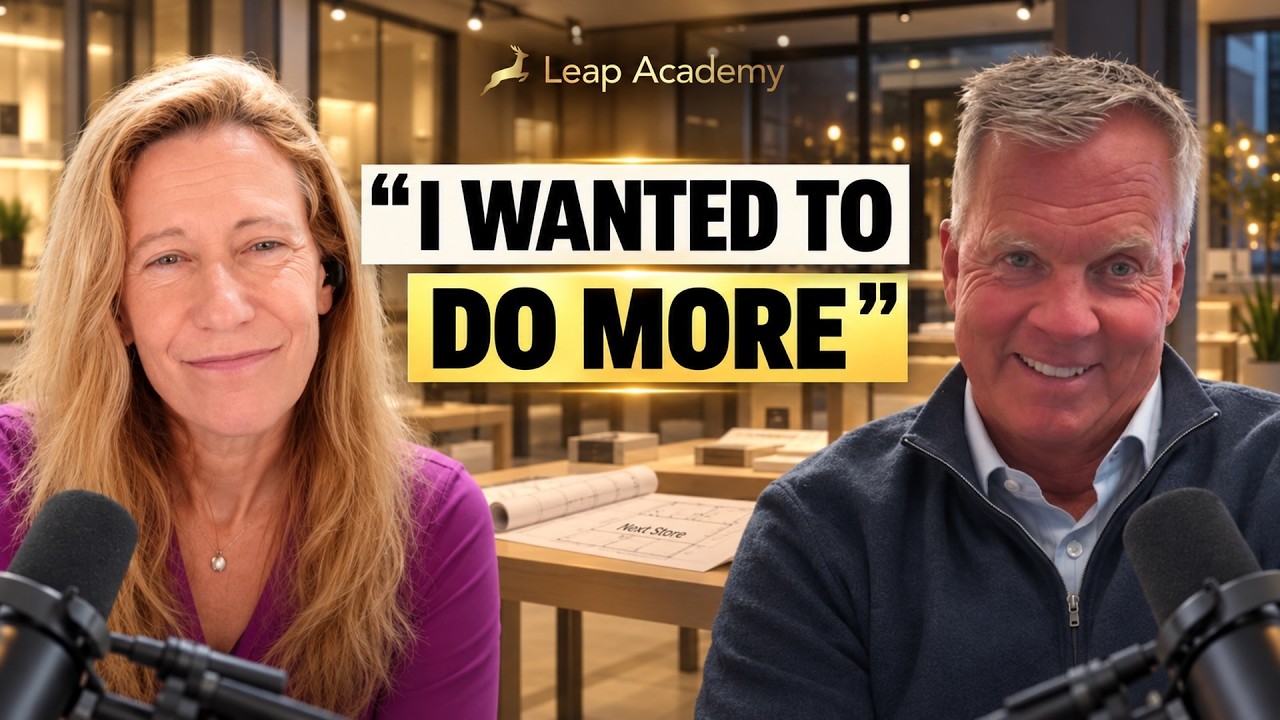
Being successful becomes addictive. You know, I was given this great job at Apple. Great company, beautiful team. But I wanted to do more. And at some point, you got to just say thank you for what I've been given and enjoy what you have.
00:46 Ilana Golan
So how do you stay resilient when your biggest career leap doesn't go as planned? In this episode, Ron shares what his experiences taught him about leadership, how to navigate setbacks, and why. Knowing when to stop chasing more can change your perspective on success.
01:03 Ilana Golan
I'm Ilana Golan and this is the Leap Academy podcast.
01:08 Ilana Golan
So let's go down.
01:09 Ilana Golan
Memory lane, Ron, and you grow up in Minnesota and go to Basie. All the best schools in the world like Stanford, Harvard, MBA, like you take all the boxes that are possible, but then you decide to go to Mervyn's and unload trucks, like, tell me why on Earth.
01:33 Ron Johnson
Well, you know, it's really it's a pleasure to be here, by the way. And I didn't go to all the best schools. I grew up at a public elementary school, high school. And then I did have the privilege of going to Stanford and Harvard Business School. But when I left Harvard Business School, I just felt it was time to figure out what I wanted to do for a lifetime, not what I wanted to do for the next job.
02:00 Ron Johnson
Because when I was at Harvard Business School, you we'd have all these cases. We did 800 over two years frequently, you know, like the founder of a company or a CEO would sit in the classroom to hear what the students thought. And the ones I admired weren't just these smart kids who went to Harvard and jumped into strategic planning or went to an investment bank and got a big job.
02:22 Ron Johnson
They're the people who really had worked their way up, and I admired the wisdom they portrayed. They were smart, but something bigger. They understood in their bones what that company and their customer base was all about. And I just admired them for putting their head down and doing such hard work. So I just decided, you know, I wanted to go into retail because it was I love stores, I'd always love stores, and it was a young person's business.
02:53 Ron Johnson
It was fast moving. It was very creative. And I said, I'll just go learn how to be a retailer. So when I went to Mervyn's, which at the time was very successful, they said, you can start in strategic planning or, you know, most for people unload trucks and start in a store. I said, look, I'll go do this.
03:10 Ron Johnson
I'll go work in the stores as long as you pay little attention and, you know, you kind of pay attention. I'm still not going to get lost there in some, you know, back, back of a Mervyn's store. And so I did that. But it was the best decision I made because I got to unload trucks and I met the team and I played on the softball team, and I, I understood how important the culture was to a store.
03:32 Ron Johnson
And I learned what people what life's like to be an hourly employee working in a store. And all of that had a profound impact on my career. I mean, eventually, you know, I went to Apple and eliminated the cash wrap. That's because I had to sit there and Thanksgiving in a long line for hours, sweating profusely, trying to check people out.
03:55 Ron Johnson
And I realized right then and there, the people love to shop. They don't like to transact. Yeah. So, so many of the lessons I learned that impacted my career happened with that choice to start at the bottom.
04:07 Ilana Golan
And tell me, did people think that's crazy? Because again, you already had like the stamps of Harvard. Like you could have chosen some bigger league type roles.
04:18 Ron Johnson
Oh no. All my colleagues thought it was crazy because I did have I had an offer to join Goldman's M&A group, and at the time that was like the job so many kids wanted. I think 100 kids applied for it and 2 or 3 of us got it. And then Goldman thought there was no way I wouldn't pick them because the salary was three, three times before.
04:42 Ron Johnson
Bonus, you know? Well.
04:44 Ilana Golan
I still don't understand, but that's amazing.
04:46 Ron Johnson
No, no, no, but it was just, I don't know, I wanted to do something I could love because I really feel each of us, there's a great job for us somewhere. And it should be something an industry love. So we wake up every day wanting to think about it, read about it for me. Visit stores. I still love visiting stores.
05:12 Ron Johnson
And if you're in that industry, you'll never get tired and the odds are you'll excel because you care deeply about it.
05:20 Ilana Golan
Yeah, and we'll talk more about creating the life you want. So we'll definitely create talk more about that because that it sounds like a theme. And then so eventually you did B, you did go to target. You were there for 15 years, created some massive achievements there. I'm actually meeting Brian Cornell, the former CEO of target. But tell me, what were some of the biggest learning from that time?
05:45 Ron Johnson
Well, what I did, you know, because I knew I kind of felt like I'd get promoted a few times. But in any company, you know, there's always a lot of peers of yours who are also very successful. So my thought was in every job I took, I wanted to execute the expected really well, but then do something unexpected.
06:09 Ron Johnson
What I mean by that is if I just, you know, if you're like a career person, if if I ran a store and I was a great store leader, but I did that by operating the target playbook or the Mervyn's playbook, well, when I left the next store leader, if they weren't very good, the business would go back to where it was.
06:30 Ron Johnson
So I haven't really had any long term value. I just operated well for a period of time. So the question you have to ask, I always ask myself is what can I do that will permanently improve the area that I'm responsible for? So that forced me to think of in that 10 or 20% of my time, if I really did something special, what would that be?
06:56 Ron Johnson
You know, so I can target. I took over the kids area and most of the people who run merchandizing, they get on trend, they buy the right products, they get behind key items, they price things while they manage their inventory, and they grow faster than the company because they did a good job with the merchandise.
07:13 Ilana Golan
And I want to make sure the audience gets this. Like, this is such a beautiful thing to ask yourself, right? How you know, what do I do that permanently improves? You know, that area. It's not just like, do good work, but how can I make a bigger, lasting impact? Like, it's just such a beautiful way.
07:33 Ron Johnson
And so I now take over the kids area target and I look at the competitive marketplace. And at that time this is in the 90s. The big retailer is the department store. And they had these huge stores with big departments with lots of choices. And then you had people like Kids R Us that were a big store off mall with lots of choices, and we had a little girls department, a big girls department, a little boys, a big boys.
08:02 Ron Johnson
And and I thought, well, what if we just had a girls department and a boys department? What if we took. We used to carry nine sizes to cover size 4 to 14. What if we did that in five and we basically took sweatshirts instead of in two racks? Have one t shirts, two racks, one. We could double our assortment.
08:26 Ron Johnson
Well, if we had twice as many choices, the odds are people would find it a better place to shop. And then I thought about it too. As a as a young parent, you know your kids are going to grow out of their clothes, so people are always buying a size ahead.
08:40 Ilana Golan
Oh, I was in target every other week.
08:42 Ron Johnson
Yeah. So instead of having a four and a five, we'd have a 4 or 5 and called an extra small and we'd have a six seven. But it was a structural change to how we sized clothes, which allowed us to double our assortment. Well, now we had, you know, Walmart had about the same size kids area. We now had twice as many choices, twice as big, you know.
09:03 Ron Johnson
Now that was a big change. It took a lot of internal work because we had to redo all of our patterns, all of our specs. The industry wasn't organized that way at all. The industry had little kids and big kids, so every one of our vendors had to change everything. But we did it. And target grew so fast in kids for the next decade, and they still size their merchandise that way, and it's now 35 years later.
09:33 Ron Johnson
But that's an example of a big change. It's unexpected. It's permanent. When I went to home, then I got promoted to home. And my by that time people knew I was going to do big things. So the CEO said, Ron, now this department is doing really well. Be very careful. You know, we're trending well here. This is not a problem area.
09:53 Ron Johnson
I just want you to learn how to buy home merchandise. I said, okay. And my first buying trip I went to London and it was a I was walking down a street from Chelsea to South Kensington and it started to pour. And I dipped inside a little batik and I saw a tea kettle, and it was most beautiful tea kettle I'd ever seen.
10:16 Ron Johnson
I mean, it was stainless steel, highly polished. It had a, a whistle with like an eagle and a really cool handle. And I stared at that thing, and then I read a little tag that said Michael Graves, fame famous architect, designed this tea kettle for Alessi. It was $150. But I asked the question right there. Why does good design have to be so expensive?
10:43 Ron Johnson
The highest priced tea kettle we sold was 9.99, you know. So then coincidentally, that whole trip, everywhere I looked, all I could see was good design, good design. But my buyers say, no, that's not available to us. That's for Europe. That's for someone else. Well, I got back to target and I was we didn't have email at the time.
11:02 Ron Johnson
I was listening to all my voicemails and someone in marketing said, hey, Michael Graves is going to be over visiting with Dayton's. We own these department stores too. And would you like to meet him? I said, that's the guy who did the tea kettle, you know, which led me to Michael, which I said, would you like to design for target?
11:20 Ron Johnson
Well, that turns out, you know, today we see collaborations all the time. You know, the gaps, collaborating with so-and-so. Everyone's collaborate. That was the first ever. Believe it or not, retail collaboration where someone had someone design. We sourced and brought a new idea to the marketplace. Well, that ended up changing target. Target has been winning by design, they say, for 25 years.
11:43 Ilana Golan
And for the audience. What this means is that for the first time, people in target could have afforded a highly designed, beautiful things that were not affordable at that point. I mean, so that's the big thing.
11:57 Ron Johnson
And we actually went through, I told my team, we're going to have the lead of our design strategy being Michael Graves, and we put in 140 products from Michael Graves. It was huge. But then we layered 10% of every planogram, you know, from cookware to picture frames to clocks to furniture that had to be classified as design, which would give us the market for fashion, but by definition would never be marked down because good design is timeless, which gave us a whole new category to merchandise.
12:30 Ron Johnson
Well, the customer turns out they loved it and it changed. Target in target was always kind of target, but it became a place that you'd love to go on your target. Run and see what you might discover, because I might find this really cool tea kettle, or this toaster, or this clock, or this toilet bowl brush that puts a smile on my face.
12:52 Ron Johnson
But that's my point is, when you get a job in your especially early in your career, by doing that, there are a lot of great merchants like me at target, but I was known for doing something a little more, a little extra, a little unexpected, and that's why I kept getting promoted. And that's what led Steve to call me to talk about doing Apple Stores.
13:14 Ilana Golan
Yeah. So I want to hear that this is a classic, what we call hidden market opportunity. Right? Somebody heard your name, somebody you know came to you. This is not one of those things that come in a job board, right? Like, what do you think? Or you probably know, but what does TV ask for and why did your name come up?
13:34 Ron Johnson
He believed if Apple's Apple had for 25 years been competing with Microsoft and personal computers, and it had lost, let's not kid ourselves. Steve came back, launched this wonderful iMac cover of time magazine cult hit. Apple's market share didn't move a needle. You know the PC had one, but it was only it turns out only 50% of Americans had a computer.
14:05 Ron Johnson
So Steve believed that the biggest challenge Apple had we had good products, they were expensive and stuff, but we didn't have a good go to market strategy. So in spite of Dell winning selling computers online, gateway closing its doors in the PC, he wanted to open his own stores. So he decided retail is hard. I've got to find a great young retailer, someone who's willing to think different like Apple does, who's super creative but who knows more about retail than has forgotten more about retail than I will ever know, he said.
14:37 Ron Johnson
Because of what identity he wanted to meet me and I went out. I decided to go meet him just because the main reason a target, I was kind of locked into being a merchandizer now I could become CEO doing that, but I always wanted to design a store, run a store because I loved working in stores.
14:57 Ilana Golan
So let's talk about it, because you actually talk about it in your book, and it's a beautiful story and you're such a good storyteller. So you go to Steve Jobs and you have this whole like description of how, you know, you wait for the interview. So talk to me about a little bit like, what was it like?
15:16 Ilana Golan
Because at that point, Steve Jobs wasn't as famous and as a persona who he did already a lot of things, but I don't think he was.
15:25 Ron Johnson
I think he was a pretty big person. I mean, the reason I say that, and I knew very little about him.
15:31 Ilana Golan
That's what I'm saying. Like, we didn't know that much.
15:33 Ron Johnson
No, because remember, there was no internet. Yeah. What we knew we read largely on magazines, magazine covers. But when I sat down. So I got there for the interview on some November evening, 1999, and I sat down on a conference room right outside his office and on the little table in front of me, all these amazing with him on the cover.
15:55 Ron Johnson
And so literally fortunately, he was late. He was always kind of a little late, but I would picked up the cover and I go, Steve Jobs, there's this picture and I'd read the magazine. I go, oh, he runs Pixar too. That's pretty cool, you know? And then he did the iMac and I. I read about him, but I didn't know too much, which was great.
16:13 Ron Johnson
So I wasn't intimidating me and Steve. I was just excited to learn about Apple and about him. So he walked in about eight minutes late, and I looked over at my left. And, you know, I was a pretty casual guy, but he had a a kneecap sticking out of a torn pair of blue jeans, you know, Levi's jeans.
16:30 Ron Johnson
And he goes wrong, I was Steve, nice to meet you. He said, come on in. And I sat in a conference room with him for seemed like three hours. Time flew by, I wrote in the book. It was like one of those conversations you never wanted to end. You're just like you're completing each other's sentences. You're learning from each other.
16:50 Ron Johnson
The future is being revealed. You know, in the present, you know. And we talked about stores and what Apple could do with stores and and we were dreaming and a target. Whenever I dreamed people would bring me back to reality at Steve, when I dreamed he'd help me dream higher. You know, if I saw a mountain this tall, he saw Mont Blanc, you know, or whatever it might be.
17:15 Ron Johnson
You know, he was he wanted to change the world. So it was very inspiring to meet him. And at the end of the meeting he said, well, you know, I've enjoyed this, you know, when can you come back? And we looked at the calendars. I said, two weeks. He said, great. Can you send me an email? Just shot an email with some thoughts about what you do.
17:31 Ron Johnson
If I gave you the job. I said, well, I'd like to do that, but I don't have a computer. We don't use email at target. Yeah.
17:41 Ilana Golan
Seriously, those. That's so funny.
17:43 Ron Johnson
But I think the lesson for people here thinking about a job, Steve didn't care. You know, he was a California technologist from the digital world. I was a Minnesota retailer from an analog world. And we were at the divide. The world was going digital, not unlike it's going to AI right now. Right. And Steve understood the importance of a concept.
18:09 Ron Johnson
I talk a lot on my book about your personal geography means something that's very unique to you. It's your lived life. It's everything where you grew up, your parents, your schools, the places you've worked, your personal interests. That's what makes you who you are. That's the most important thing you bring to work every day. And Steve understood that.
18:32 Ron Johnson
So I didn't have to try to be someone I thought he would want to create his stories. I just tried to be me. And that's.
18:41 Ilana Golan
Why version of that. And that's incredible.
18:43 Ron Johnson
It turns out that's what he loved about me, I was real.
18:46 Ilana Golan
It's interesting. So first of all, at that point I was in Intel. So it just kind of brings back memories. So I was a geek, but I had.
18:54 Ron Johnson
A great company. Was that Paul Allen was Paul.
18:57 Ilana Golan
Well, I was in Israel, so we were kind of on the, on that side. But but yeah, like I remember the times that we basically thought Apple lost everything. So we kept on talking about how, you know, it just it wasn't a thing. And I'm actually living across from Steve Jobs garage where he started. So but at that point, Apple is not doing well.
19:21 Ilana Golan
Target is doing phenomenal. Why do you even say yes?
19:26 Ron Johnson
Because I guess for me, I love a challenge. You know, I always love doing the hard thing. You know, I target I had really been succeeding everything I'd done. But in many ways, the more successful I was within target, the more my peers would push back. Because they didn't. They couldn't compete in the same way. There are a lot of people that aren't, comfortable pursuing Nunez, thinking through what's next and trying to do that now, winning through differentiation, you know, and so people like a target would say, oh, you know, Ron's being very successful, but it's hurting target because now Walmart customers will think target so expensive.
20:10 Ron Johnson
And I'm not going to shop there. And it wasn't true. I mean the whole target was doing great. The stock went up 12 times, but I found it very difficult to work in a company that didn't embrace what I believed was the right way to win. I could have stayed and maybe had a chance to have a really big job there one day, but I was like two levels below the CEO.
20:30 Ron Johnson
And I just thought, you know, why don't I go somewhere that has the same values that I've learned to believe, right? And that was Apple. Apple. I felt like at home, you know, talking to Steve, I felt at home. I felt like I'd finally found a place where I could be my best self. And so then it was, you know, life is not about what you make.
20:56 Ron Johnson
The net present value of life isn't how much money you make or your job title. It's what you get to do. You know who you get to work with. Life should be about the thrill of work, not the outcome of what you do. So make sense. So I mean, this is like I was like like a kid in a candy store.
21:17 Ron Johnson
I had to go to a new company, even though it's not doing very well. It's a well-known brand. I knew that this would be a fun challenge.
21:24 Ilana Golan
So at that point, they're not even sure that they are all in on physical stores, right? Like, I mean, it's an experiment.
21:32 Ron Johnson
The board had, you know, battles about it. One of the board members resigned because Steve wanted to do stores. They thought it was a stupid idea, as did most of the market, and.
21:44 Ilana Golan
It didn't make sense. Like directly, we can understand it. Everybody went digital.
21:49 Ron Johnson
Think about this. For every Mac sold their 19 PC sold in the United States, Apple is not even sold at Best Buy or Circuit City because they wouldn't carry the Mac gateway, which was selling the only retailer really selling PCs of one brand was closing its stores. So the world's going to the internet. Marc Andreessen, who lives in the Cupertino neighborhood, has prophetically said in 25 years, stores will no longer exist.
22:23 Ron Johnson
You know, and you know, I can see where people questioned retail can be capital intensive. It takes a lot of money. Apple has no experience on this, you know. Well, why don't you test it is what the board said. And so Steve told me I've got approval for four stores. And I just said, well, good for you, good luck.
22:43 Ron Johnson
Because and I wasn't being arrogant, but I said, I am not leaving my career for a test. Steve, you've got to be all in. Either go to market is a problem or it's not. If you need to go directly to the customer, you got to be all in. So then he says to me, I think he is selling, but he goes, Ron, I've got $4 billion in the bank.
23:05 Ron Johnson
If I could write $1 billion check to date up 100 stores, I would write that check. And I said, really? He said, yeah. I said, I'll come. And that's what got me over the hump because he was all up.
23:18 Ilana Golan
That's incredible. But talk to me about that, actually, Ron, because I think there's always like, how do you balance between experimenting and between something, making those decisions when the stakes are pretty high and the price is really high? So how do you.
23:33 Ron Johnson
Remember Apple? Apple didn't have a choice. Steve understood, which I believe to. If Apple didn't succeed with stores, Apple wasn't going to. As a company, there's no way you're not going to buy a high tech product online and switch from windows or spend $1,000 on something without having a support system. All that stuff. And so it really wasn't an option for Apple.
24:03 Ilana Golan
Most of what you guys have done was stores is just mind blowing. Like, this is where Steve.
24:09 Ron Johnson
But remember, we didn't know how they would do. But we knew if Apple didn't succeed in stores, it wasn't. See it anyway. You know Apple would not be what it is today. I think we all know that without stores, you know, the stores played in and they not only, you know, are the gold standards where you'd want to buy an Apple product and get help.
24:28 Ron Johnson
They they help everybody. No matter where you buy, you people go to the Genius Bar, whether you buy at AT&T store, Best Buy, target, it's that support system that builds this cult like loyalty, which is Apple's number one asset today is its 2 billion loyal customers. You know, they're going to upgrade when they're ready, but they are a big part of the company.
24:49 Ron Johnson
But that's because Apple reinvented the customer experience and then use that knowledge to raise the bar everywhere. So you go to a Best Buy store, there's an Apple Store within a store. And that's true throughout the world at in Europe, you know, at Dougherty at all these places. So Apple's point of sale went from its weakest, you know, strategic asset to one of its strongest, you know.
25:18 Ron Johnson
And so that's why. But my only point is, if you believe that something is a real critical issue, you got to solve the problem. You can't just put your head in the sand and say, it's not important. Steve understood that.
25:29 Ilana Golan
Yeah, it's such a big bet. But it was so profound. So talk to me about that first ride, especially, you know, toward the first store. And by the way, my kids love the New York Times at the New York, you know, Fifth Avenue store. I mean, they go all the time and it's like a favorite. And it's such a profound, you know, place.
25:51 Ilana Golan
But talk to me about the first store. Like, how do you even go about it?
25:55 Ron Johnson
We decided we were going to put stores in malls because we're going after the people who've never bought a computer. They aren't going to get in their car and drive ten miles to check out a mac, but they might go ten feet out of their way. So we're going to put them in malls. And that took a little debate.
26:08 Ron Johnson
But, you know, an hour and we figured that out. Then we decided to build a 6000 square foot store. Why? Because we wanted to be in the center of the mall. If you're going to be in the mall, you want to be in the best place. Well, those stores were all like the size of the gap.
26:23 Ilana Golan
Let me take you there for a second, because that's a very expensive decision. You're deciding the stores are bigger, you're deciding that they're going to be in the most expensive areas. How is that going through? And are you scared at that moment?
26:36 Ron Johnson
No, I'm not scared because at the end of the day, if you open a store, the most important thing is traffic. You got to have people and you got to have a design that makes people feel comfortable. So you can't, spreadsheet your way to success.
26:54 Ilana Golan
I love that one. Oh.
26:55 Ron Johnson
My God.
26:55 Ilana Golan
Never setting you on that one.
26:57 Ron Johnson
That's a new one. You know, you've got your way, which leads to innovation, which leads to the outcome you want. And that's how Steve lived his life. You know, it wasn't obvious to most people. You could have a a phone without a keyboard, but it became the iPhone. That's like putting a big store in a mall. It's the same kind of bat, but you believe in it because I'm going to hire these people who are put in all that effort.
27:26 Ron Johnson
At least give me a chance to win, make sure the traffic will come, you know. But now the beauty of that is we only had four products so you could fit them in 32ft². But to be in the same most retailers would build a store. How big is your product line? Well, you know, we need a conference room table and we could have built a small store, but people think we're a small brand, so Apple had to show up.
27:52 Ron Johnson
I told, see how big is the brand? He said, are you as big as the gap? He said, bigger. Well, then we got to be the size of the gap. So we built a big store.
28:00 Ilana Golan
And let's talk about the gap for a second, because the gap is, which I love, because in general app, you know, I mean, you didn't look at the whatever 3 to 5% that Apple was in, you were looking at a or, you know, and it wasn't even just about bringing some designers or whatever into the Apple products, like you were looking at a massive potential.
28:24 Ilana Golan
Why?
28:25 Ron Johnson
Well, I.
28:25 Ilana Golan
Talked to us about it.
28:26 Ron Johnson
Well, Steve, you know, we had that was our first conversation. I said, what are your goals? He said, I think we can double our market share. We go 5 to 10 if we really focus on that creative consumer, because a lot of people use Macs for work in the creative departments. And I said, Steve, you know, I'm this Minnesota guy.
28:44 Ron Johnson
I don't have a computer. You don't want to come after me. He said, well, you're creative. I said, yeah, but I'm half a million. Hasn't bought a computer yet. I said, you're looking at as if the war is the game's over. You've got to look at this is halftime. You lost the first half. You're actually way behind. Its 19 to 1.
29:04 Ron Johnson
But there's a second half here. And what that customer needs is they not only need to get their hands on a computer, understand why they should buy one. We have got to overcome their fear of technology. That's the enemy here. They will not believe they will have the skill to figure out how to use a computer. And so I said, with these big stores.
29:26 Ron Johnson
Let's devote half the space to trying a product and half to helping them overcome their fear. Well, if classes, you know where they can come in every day and getting started on a mac, we can have tables, we do 1 to 1 training, we'll put in a bar just like you go get a drink. But Will, it is smartest people.
29:46 Ron Johnson
They'll dispense advice and we'll call it a genius bar. You know, we did all these things that then when someone walked in the store, they could get online and try a computer. You couldn't do that anywhere else at the time. They were just boxes or they were things out of the box. Nothing was connected to the internet in the store because there wasn't Wi-Fi.
30:07 Ron Johnson
There weren't high speed networks, there weren't cell lines. You know, stores didn't have connectivity. But we figured all that stuff out. So people started flocking to the store just to try a computer to get online. They'd meet their friends at the mall. I'll meet at the Apple store because they could surf the internet. But when we talked to some of the Mac, we just point to the back and say, well, look in the back there, there's the Genius Bar.
30:30 Ron Johnson
If you have a problem, that's where you come. We're open, you know, every day, all day long. If you want training seals, people sitting in that class, those are free. You know, if you buy a mac, we'll make sure you know how to use it. But we put together an experience that, you know, got people to try products and got people to get the help they need it.
30:50 Ron Johnson
Now it seems so obvious.
30:52 Ilana Golan
And until today, it's an experiment and it's an experience. It's not. It's it's a belonging. It's an experience. It's not a store.
31:00 Ron Johnson
I remember telling you at one point, we're never going to sell our way to success. Yeah. We've got to serve our way to significance. That's a big difference, you know? So we built the store on a service model believing your what? And the other thing I said to Steve, you know, everyone who gets into retail stores thinks you're in the product business.
31:25 Ron Johnson
You're not you're in the relationship business. When you build relationships, they buy products. And so the way we thought about Apple was we're either launching a relationship with a new customer, we're deepening when they come back, or restoring when they have a problem, like at the Genius Bar. But we've got to look at the every customer. It's the lens of where are they in our relationship with them.
31:54 Ron Johnson
And you look, today Apple has gone from 25 million to 2 billion customers globally. But they've got the most loyal customer base in the world. But you really feel like Apple's there to improve your life. I mean, Tim says that all the time. We're here to enrich their life. It's not about selling you another product, you know, it's just a different mindset.
32:17 Ilana Golan
I love the mindset and actually it's interesting. We had Howard Bihar, the previous president of Starbucks, and he said, we're not in the coffee business. We're in the people business. And it's interesting to kind of it's the same thing that you just said. It's the same. It's amazing. Yeah.
32:33 Ron Johnson
All the great companies really. Profit is the reward for serving their customer well. However you want.
32:39 Ilana Golan
To tell me this story of the first store when you brought in Steve into the very first day?
32:48 Ron Johnson
Well, he didn't come to the first. He was at home, you know, he thought.
32:51 Ilana Golan
Right. Okay. Yeah. Okay.
32:53 Ron Johnson
Yeah. No, we worked together in the warehouse. He was excited. We he actually came. We did a big press event two days before opening of the first store in Washington, DC outside and McLean, Virginia. Steve was there, Tim Cook was there, CFO Fred Anderson, I was there. We gave a tour of the store. We got an off site.
33:12 Ron Johnson
We told him why we're opening stores, and no analysts thought it was a good idea. They thought Apple's crazy. And then we opened two stores the same day, May 19th, 2001, exactly 25 years ago. And I called Steve in the morning. I said, Steve, I think I blew it. He said, why? He goes, well, it's 20 minutes till the store opens.
33:37 Ron Johnson
And literally there's 50 people in mine. I thought we'd have a crowd. He said, they'll come. I said, okay, well, I guess what happened was people thought the store was at 10:00, will come at 10:00, but they all came at the same time. At about 1020, after I welcomed in the group, you could see lines starting to form.
33:58 Ron Johnson
The line went down the hall past J.C. Penney, across the bridge into the parking lot, wrapping around the parking lot. We had thousands of people in line at 10:00 in the morning, you know, and they all came at the same time. It was like a traffic jam to come to a a retail store. So the stores were immediately popular, but they didn't, you know, hit our financial targets right away.
34:21 Ron Johnson
We had to do $15 million store. They did ten the first year, 11 or 12 the second. But we kept building them because we knew customers loved the store and they were packed with people. The problem was, as you mentioned earlier, Apple had a product problem. The processor roadmap was tired. We had Motorola processors. They were not competitive.
34:45 Ron Johnson
People weren't making software for the Mac at the right way. Apple has transitioned to OS ten. There are a lot of other things going on that made Apple a challenge company, and that's why the stock went down. It was trading cash value in 2002, you know, 14 months after the store is open. But the stores were not the problem.
35:04 Ron Johnson
It was a product problem. And then we were patient and we kept opening stores. And in 2004, when the iPod went to windows and we came up with the nano, you know, that small, beautiful color with great marketing. The stores went nuts. And everything we had dreamed of paid off. And then people started to who bought a iPod, bought a mac, and there was this iPod Halo, they called it.
35:28 Ron Johnson
And then a few years later, we launched a phone. And the phone did great. And the stores became part of, you know, the American culture. But it took commitment. You know, it took a lot of hard work.
35:42 Ilana Golan
Was there doubts wrong? Were there areas where you're like, did I go in the wrong direction? Are these two expensive?
35:51 Ron Johnson
Yeah. No, there was, there was. So we after six months, I said we got to make stores a little smaller. So we went from 50ft wide to 30, but we could get all the products in there, and we had to take out the theater, but everything else fit. So we made our stores 40% smaller for a little while.
36:10 Ron Johnson
It was still a good sized store. It was a little smaller. We kept the with our service philosophy. There was a lot of pushing internally. A lot of the employees thought we should put people on commission. They'll sell better. I was just every bone in my body against that. So we never did that. So and then we just kept trying to figure out what else can we do here.
36:32 Ron Johnson
And we went after kind of thinking a lot about the education customer. We did things for kids. We put summer camps in the store for free. You could send your kids to camp for a week, and every morning from nine till noon, we were packed with little kids running around on the computers. Now, on Fridays, the parents would come in, they'd show the little movie they made on iMovie or something.
36:55 Ron Johnson
It was super fun. We let teachers anytime they want to take over the store for a classroom. They could do that because I always felt if a customer wants to buy and it's packed with kids, they'll come back. You know they're going to feel good about Apple if they see that kind of commitment to young people. And so we just kept inventing ways to bring more traffic into the store just to build awareness and just believing that eventually this would take off, you know, so I, I really am a believer.
37:31 Ron Johnson
You can't you can't be in a hurry. You know, that's one of the big changes. You know, ever since Facebook launched, there's this terrible motto move fast and break things. That's the opposite of what? Apple, please.
37:45 Ilana Golan
Let me ask you as a leader, what is the how do you balance between moving fast and patience? Because you need both.
37:52 Ron Johnson
You do, but you need to be in a hurry. Anytime you're creating something. There's speed, quality and cost. It's like a triangle. When you go fast, you give up on quality, right? And you increase your cost right just by nature. So if you want, if your top priority is quality, you can only go at the pace that you can deliver quality, you know, so like you know Apple look at think of this.
38:25 Ron Johnson
We we launched an iPod in 2001. We're a consumer electronics company. The next product we launched was 2007. Six years later, that's when the iPhone came out. Now we're making a small device. There was a lot of conversation. Build a phone. Steve would say, we can't do another product until we've earned the right. The iPod has to be successful.
38:49 Ron Johnson
When that's successful, we can consider launching another product that's.
38:53 Ilana Golan
Changed the world. Yeah, yeah.
38:54 Ron Johnson
But think about it. Apple's done pretty well, you know, and the only product Tim really launched that's meaningful is the watch, which came out in 2015, eight years. Well five years after the iPad. Then there's been you know, the App Store has been great. You know he's done a lot with service. Tim did a lot. He did a great job of not being critical of Tim at all.
39:17 Ron Johnson
But Apple wins on quality, security, customer loyalty. It doesn't win on speed of innovation. It wins on quality of innovation. There's a disconnect between speed and right. That's just a fact of life, right? Yeah. There's nothing easy to do fast. I want to, you know, get strong. That's going to take time. I got to work at that for a while.
39:47 Ron Johnson
It's not going to happen in one week of working out. You know, I just think you you've got to ruthlessly eliminate hurry from your life. Amazing. And every.
39:55 Ilana Golan
So hard these days. So we'll talk about that later.
39:59 Ron Johnson
I don't think it's hard at all. I think it's easy.
40:01 Ilana Golan
Yeah.
40:04 Ilana Golan
I know some of us are impatient creatures, so that's a little hard. But what? We might go deeper into that. But you grow the stores to about, what, 400 or.
40:14 Ron Johnson
So just we were opening, we were designing ready to open our 400 store when I left.
40:19 Ilana Golan
Amazing. And you did have maybe before we jumped to J.C. Penney. You did have a really special relationship with Steve, which I do want to talk about just for a second, because you you guys had daily meetings, which is so rare, and you get to had like a very special relationship. Walk me through a little bit like what that look like.
40:43 Ilana Golan
And especially what did that look like towards the end of, you know, was his disease.
40:48 Ron Johnson
Well, I'd say I had a very close relationship seed, but I wasn't alone. Steve had very close relationships with a lot of his senior team. You know, Jony super close, Tim, Phil Schiller. So I don't think I'm starving. I wasn't unique. What was unique to me is that when I joined Apple, after about a month, I said to Steve, you know, just a casual conversation.
41:12 Ron Johnson
I, you know, we're always just chatting. And I said, you know what's interesting? If we're successful at the stores, if it's five down, 95 to go, you know, the first impression of every customer going forward is going to be a store, not a product. It's going to be experience, not a product. Apple has been a product company. We're not transitioning to a customer company.
41:38 Ron Johnson
And he looked at me and he goes, it's just not his head. And then we walked away. He called that a little later that day and he said, Ron, what time do your kids go to bed? I said, 8:00. You know, so do mine. I said, great. And he said, can I call you? And I said, sure, I'm available tonight.
41:57 Ron Johnson
He said, no, can I call you every night? And I said, every night. He said, for about a year and, and, and the point he made was he said, Ron, everything at Apple as a product company, I can touch here in Cupertino. I go to Jonny's design lab. I have lunch with them every day. I'm working on the design all the time.
42:20 Ron Johnson
I look at the software every Monday afternoon for four hours. On Wednesday, I look at all the ads and shit comes up. Here. We do the marketing, the brand. I have an ability to touch. He goes, what you'll be doing? Well, if you're right, we'll have a big impact on the brand. Where we locate stores is really important.
42:39 Ron Johnson
The design of the stores, the people you hire. I'm not going to be able to review that. So you need to know how I would think. And you only have to come to me when you're not sure how I think about something, but to know how I think we have to know. You have to know everything about me.
42:56 Ron Johnson
So we talked about faith and family and movies and Apple and retail and everything. So, so I, I think that's what made my relationship unique, because Steve felt a need to really be he for me to understand in my bones how he would think about this.
43:19 Ilana Golan
Which is so powerful, to enable your leaders to think without needing your approval every time, which is just such a beautiful way. And by the way, when you talk about Johnny, is that Johnny or somebody else?
43:32 Ron Johnson
No, I was Johnny. Jony, a designer who.
43:35 Ilana Golan
Okay. Yeah. Yeah, yeah. What happened was J.C. Penney. How did that even form?
43:39 Ron Johnson
And let's talk about. I got to a point. Steve was near, you know, it was very clear he was near the end of his life, you know, and he had made that clear to several of us. And, you know, I, I was about to turn 50 and actually running Apple Stores was like a hobby. I felt like a, you know, I used to coach my kids when they were young and all the sports, and as they got to be teenagers, I'd be cheering them on the sidelines.
44:05 Ron Johnson
That's how I felt with my team at Apple. I'd go to all these store openings and even though I'd help with everything, you know, but I felt like I was cheering on a team that knew what they were doing. And and it wasn't hard. It was just like fun. And and I thought, you know, I, I kind of really enjoyed the challenge of bringing design to target.
44:24 Ron Johnson
That was really fun imagining the Apple Store, and I didn't know if it would work, and working with Steve and everybody to create that from the ground up and back to what I said about why I went into business school, you know, I just wanted to do things I loved, and I wanted to do one more challenge. And then I got this call.
44:43 Ron Johnson
A couple of guys, Bill Ackman and Steve Roth, had made a big investment in Penney's. They could add a board member. They wondered if I'd be on the board. Oh, that'd be fun. I could do that. Get back to retail. I grew up next to Penney's and and then the CEO had a car accident, got injured pretty severely, and it made the board think, boy, we ought to think about a succession plan.
45:07 Ron Johnson
And somehow they concluded that, well, Mike, I think was 66 at the time. Would Ron come in as CEO? And I thought, what could be kind of fun? I mean, a hundred year old department store, the department stores are on their way to irrelevance in the US. They've been going down and down and down. You know, everyone's shopping online, big box stores, Ross, Marshalls, specialty stores, outlet stores.
45:35 Ron Johnson
They weren't going to department stores as much. But in Europe there were a lot of great department stores. So maybe it'd be fun to try to reinvent. And so after back and forth, I made a decision to go join J.C. Penney as CEO to try to turn it around.
45:49 Ilana Golan
Amazing. So let's park this for a second. So you're telling Steve that you're about to leave. Talk to me a little bit. Like first of all, how did Steve react to kind of his kind of end of life as far as you know. And then you had a really special moment with him kind of towards the end. So if you can go there for a second.
46:10 Ron Johnson
Yeah, I got so, so I told you it was hard. I knew, I knew Steve was, you know, not doing well. It was obvious just looking at him knowing, you know, a little bit. He was very private about it. And, and I told him, you know, I hate to do this right now because I know, but I've got this chance to go run.
46:28 Ron Johnson
And I really think I'm a retail guy and I'd like to do this. And he said, Ron, I can understand why you'd want to do it. You've done a great job at Apple, you know, and I think there are a lot of other things you could do besides this one. But if you want to do it, I won't stand in your way.
46:44 Ron Johnson
You know, I can understand that because he knew my love of retail. And so I told Penny's I could come. And then he called me up a few days later and said, now when are they making the announcement? And I said, well, it's actually in three days. He goes, can you come to the house? I said, sure, so I lived, you know, 15 minute drive.
47:04 Ron Johnson
I just jumped in the car and ran over there. And I went back to see him. And he he then told me that he had less than six months to live, and he asked if I would stay, you know, until he passed. And I said, of course I will. So then I called Penny's, but because of the way the clock was working, they had to make the announcement because I had accepted the job, but they had to announce it because a public event.
47:31 Ron Johnson
And so they just announced that I would be starting six months from now. You know, we picked November and then Steve passed away in early October, you know, you know, 2011.
47:44 Ilana Golan
He was, at that point, kind of more of a personal friend, I guess. I mean, I'm sure that was hard for you.
47:50 Ron Johnson
You know, our retail stores were doing well in his last years. He could only put so much energy into so many things. Tim was the interim CEO, you know, so Steve was spending time on products, marketing, you know, things that he loved and then were really important to him into Apple. You know, so the stores like I would the last few years, I Steve I want to show you what we're doing.
48:15 Ron Johnson
Can you come over about every six months? Even though I talked to him all the time, I'd say, come on over, let me show you the design. We'd show my room filled with 20 models around the world, from Stockholm to Shanghai to Chongqing to Hong Kong to Barcelona, a story building. And he loved doing it. But, you know, he he didn't have time to do everything.
48:37 Ilana Golan
Of course, of course. And actually, we had a beautiful conversation. You would have loved it with Adam Cheyer, the founder of Siri. So right when they acquired Siri, or, you know, it took a while for them to, you know, to merge. And right when they announced that kind of in the stores speaking of that's when Steve roughly, you know, roughly passed away, which was pretty insane.
49:01 Ilana Golan
But okay, so but and you have a kind of a very beautiful moment with him towards a few weeks before he passes.
49:10 Ron Johnson
Yeah. Week before actually. Yeah. No, he asked me to come over to the house one more time. And as I walked in, Laurene, who is his wife, was in the kitchen and and she just said, Ron, you know, it was just she didn't have to say much, you know, I knew it was probably the last time I'd see him.
49:32 Ron Johnson
So I went in and we sat using his, you know, bedroom, and we sat and chatted for about an hour and a half. And then we had a beautiful moment where there's a great board member at Apple named Bill Campbell. You know, Bill, he's kind of the trillion dollar coach. There's a book about him. He he was an advisor to Sergey and Larry and some instead he was on his Steve's.
50:02 Ron Johnson
And he literally would walk with Steve every day. And Bill and I had different personality than Steve did. He's an introvert, were extroverts. And Steve said to me, he goes, Ron. And he was pretty frail at the time. He's in bed. And he said, you and Bill, you guys like to hug people. I said, yeah, I said, yeah, that's true.
50:24 Ron Johnson
And he said, but you never hugged me. And I said, well, Steve, I never thought you were the hugging type. And he said, well, I'm not, but I could use one now. You know, so we had a kind of a last moment that was pretty touching. And I talked about it in the book, but that's kind of all I'd say.
50:45 Ron Johnson
And but I did say to him, I, I've a person of faith. I said, Steve, I'll give you a hug if I can say a quick prayer. And he said, okay, because we had talked about faith before and and I just said, Dear God, say hi to my friend Steve. That was it, you know. And then I gave him the hug.
51:05 Ron Johnson
And then after a while you said my goodbye. And that was the last time I saw him, you know, alive.
51:11 Ilana Golan
That's hard. Did that, by the way, change anything in terms of how you see life success?
51:18 Ron Johnson
You know, I've always said pretty deeply about life and what happens after life. And I've got points of view on that. Okay. And I don't think Steve's passing had a profound impact on how I think about that. You know, I really don't when my dad passed away, your later, it had a bigger impact because I was so close to my dad too, but that I don't think it was a, a major, major, you know, it was a major, but it didn't change how I think about those kind of issues.
51:49 Ron Johnson
I don't think.
51:50 Ilana Golan
By the way, what what did your dad passing I mean, my mom passing changed my life. So I'm just curious what it did for you.
51:57 Ron Johnson
You know, I grew up in the, like the first line of the book, it was, you know, something along the lines. You know, the first thing I ever experienced was lot, you know, I mean, my first memory as a child, I was four years old. I was in the principal's office, not because I was in trouble. I was with my mom.
52:21 Ron Johnson
They were I was doing the interview to see if I could start school a year early. It wasn't a year, but where my birthday fell, I beat nearly and the principal asked me, Ron, what color is George Washington's white horse? And I said, black. Yeah, so I guessed wrong, but I walked out in my mind. I still remember my first memory bent over, arms on my shoulders, saying, Ronnie, Ronnie, no matter what happens, I'll always love you.
52:51 Ron Johnson
So my first memory was making a mistake, but knowing I was loved. And that's the foundation of self-esteem. Knowing that you're loved, right? And and I had that from both my parents super close to my whole life. For the last, probably decade of my life. I called my dad on the phone, on the way to work and on the way home every day, you know?
53:17 Ron Johnson
So we had. And so then, you know, I'm in the middle of my pennies challenge. And it's been almost a year now and it's all not going well. And he was the one person I could talk to and just lay bare what I'm going through. And, you know, he just listened well. And, you know, he'd tell me, you know, you asked for this.
53:37 Ron Johnson
You know, he even told me, he said, Ron, he goes, I hate to tell you this, but you've lived a charmed life. You've had so much success. You know, a lot of that's luck. It's the other people that have helped you do that, you know, I know parent wants your child gone through a long, hard time, but this is probably good for you.
53:59 Ron Johnson
And, you know, so he helped me through that. But then all of a sudden he was gone. You know, and he had lived a long time. So we had a beautiful goodbye and all that. But it was really hard to lose him because he was someone who had been with me obviously my whole life in a big part of my life, you know.
54:17 Ilana Golan
And it was a really hard time. So let's talk about for a second. J.C. Penney, I mean, you have all I mean, a lot of these stories in your book. So just making sure that people grab it because it's such a beauty. You're such a great storyteller. And thank you for this. So you are deciding to go to J.C. Penney?
54:38 Ilana Golan
I mean, it's a huge opportunity. But we're also going to say that you've been really successful until then. Like, everything was just like target Apple. Like, I mean, you were like the pit of me of success. So I think sometimes taking something so hard, you know, it's even more painful. But talk to us for a second about J.C. Penney.
55:03 Ilana Golan
It's an old school type shopping coupons and stuff. Right. And you're trying to reinvent it. They talked to us.
55:11 Ron Johnson
They had nearly a thousand stores, 600 in big cities that were pretty good size, very low cost rents and their customer base at age quite a bit. It was, you know, 50, 60 year old person, not a young family like we had a Target or Apple was building. And and I it felt that if J.C. Penney was going to survive not a hundred years, it had to change the model to appeal to a younger customer base, a younger family that's going to grow with them and not have their customer just sort of fade away, which is what had been happening for a long time.
55:49 Ron Johnson
And and so the theory was that and the CEO told me that half of America shopped at Penney's once a year. Well, I figured if they come once a year, we get them to come twice. We can double the business, you know? Simple as that. So this shouldn't be that hard, but you got to make some big changes, you know, which I'd done my whole life.
56:10 Ron Johnson
Design a target, bringing computers to everybody at Apple. You know, this is not going to be easy, but it's not impossible, right? Well, then what happened with the delay? For six months, I'd a chance. I spent a week, a month with the Penney's team to get to know them. I went to Hong Kong once for a long trip with the sourcing team, went to New York with the buying team, met a lot of the spires, went to headquarters, worked with the internal teams with Mike, and then at the same time, I started to spend a lot of time matching.
56:43 Ron Johnson
How would we transform JCPenney? And after three months, I realized meeting the team, they don't want to change. They don't see any need to change from their perspective. They had survived. All these departments stores got gobbled up, bought by Macy's. Federated May company closed down. They were a stand alone serving the lower income customer. They had survived. They were doing everything great.
57:13 Ron Johnson
And I go to the I finally called Bill Ackman and I said, Bill, I don't think I can come. This team does not want to change. And what I think they need is tragically different. And he just said, Ron, come out. We have a board meeting in two weeks. Share your vision with the board. I assure you the board wants to change.
57:34 Ron Johnson
They'll be behind you. So then I finished up putting together a huge vision of how we'd have to change everything to win store design, pricing, the products we care, you know, keeping the best, but bringing in all these new ideas, you know, marketing people, you know, how we serve customers, everything, you know, very comprehensive. And I did that.
57:59 Ron Johnson
And then the board said, oh, we want to do this. And and for some reason I told them I wasn't going to do it. I said, all right, I'll do it. And so I came. And then in December, my first official board meeting, I said to the board, we got a big decision to make, because if you're going to change a retailer, you do it.
58:21 Ron Johnson
In February, you finished up holiday. You got a whole year to get ready for the next year, a massive change. That's the time you make change. We could get started now, or you could wait a year and give ourselves time to really do this. Well, well, the board said, what do we got to lose? Let's go. And I wanted to go to I mean, I was excited, you know, I'm sure they felt Ron knows what he's doing.
58:45 Ron Johnson
And so I three months after I got there, we launched into this massive transformation, changed the pricing overnight. No coupons, fair and square everyday. Low pricing. You know, we started to bring in new merchandise, all these shops coming in and it was a lot of change and we had planned to be down 15%. We knew revenue would go down.
59:06 Ron Johnson
There was no sales. We're going to lose a customer, however we that enables us to go after a new customer. Well, sales were down 20%. Well, to me that wasn't that much. Apple had been down 38% in 2002 when we were kind of rebuilding the company. This was far from the course. It's in the ballpark. But immediately, board members, Ron, you got to run a sale.
59:31 Ron Johnson
What are you doing? You fired your customer. I said, I explained to you what we're trying to, you know, but it was amazing how hard it was, to navigate through a team that didn't want to change in a board that didn't understand change. Now I'm blaming myself for this, you know, because I should have been smart enough to know that you can't go until you have a team that's bought in, and then you want the team to have input to your vision.
60:04 Ron Johnson
No one wants to implement Ron's vision. Yeah.
60:08 Ilana Golan
This team is not ready for this reinvention. So you need a new team.
60:12 Ron Johnson
But but I want to own it myself. I own it all. I do that in the book. I'm not trying to. But anyway, it was just if you want a lesson in how not to transform a company, you can look what I did because it was too big, too fast.
60:25 Ilana Golan
But the best lessons are from failures anyway. We don't learn that much from success. So take me there for a second though, to hard moments like you understand that this is going wrong. Do you sleep at night? Like how do you like, how do you recover? Personally, Ron? Because I think a lot of our people are dealing with a lot of hard things, and it's just sometimes really hard to get up.
60:49 Ron Johnson
This was super hard for me. You know, when I went to Penny's, I thought no one would care because I would look at, you know, your news on my iPhone and there'd be a story every three months about pennies. You go to Apple, there's ten stories a day. You know, I go now, I get to go over, get out of the limelight, just go do it.
61:08 Ron Johnson
And suddenly it became a really is it visible?
61:11 Ilana Golan
Yeah, it became very visible.
61:13 Ron Johnson
I don't know why, but it became a very visible thing. And it was like, literally I'd go work out at the I was commuting to Dallas, still away from my family. So I'm alone in a hotel room. I'd go work out in the mornings. There I'd be every morning, CNBC or one of them. There's Ron's picture with headlines I'm not even listening feeling.
61:38 Ron Johnson
Then I have to go look at her sales. I know they're going to be down. The only question is how much are they started to improve? You know, it was just there wasn't a good day. And I'd walk into the building and I felt like nobody wanted me to be there. And I don't think they did. Quite frankly, I think there were enough people who had been there a long time who didn't believe in what we were trying to do.
62:00 Ron Johnson
So it was really hard, and I had not been through a tough period like that in my business career. Yeah, yeah. And so I probably, you know, in hindsight, I wish I'd been more resilient. I wish I had stayed longer, I wish I had stuck it out longer, I wish I had turned, you know, I was able to fill a handful of open positions with people I knew.
62:24 Ron Johnson
Well, you know, I kind of wish I had met with them every other day to say, guys, this is hard. Let's hold hands. What do we need to do to get through this? We kind of all, we're so busy doing our own things. I kind of owned it all alone, and that was probably the worst thing I could do because I had no support.
62:43 Ron Johnson
And then eventually, I think, for survival. I just told the board, look, if you want to go back, you guys all seem to want to go back to this old model. I won't stand in your way. Bring someone else in who wants to run that promotional strategy? I didn't come here to do. I came here to get you a new customer.
63:01 Ron Johnson
If you don't think we're on the right track, I will step aside. And so, after three of those conversations, three straight months in a row at board meetings, they said, we're going to make the change to go back. And I was in many ways, I was relieved because it had been the toughest 18 months of my life or whatever it was, and I was relieved to be relieved from that.
63:24 Ron Johnson
But on hindsight, it was the wrong decision for Penny's. You know, the stock went down another 50% the year after I left because the customer they lost had gone somewhere else. All the customers we were getting left. Then they brought in a new CEO, went down another 50%. And now it's basically owned by the landlords. You know, the landlords keep it open because there's co tenancy clauses.
63:52 Ron Johnson
If Penney's closes in a mall all the tenants can go. So it's basically you know they're working hard trying to keep the business afloat. But it's a difficult thing. And I played a big part in that. You know if I hadn't been there maybe it'd be modestly better. But I think it was pretty clear not.
64:11 Ilana Golan
Where it would die. Like, we never know. But what happens on day one of now? You don't have a title?
64:19 Ron Johnson
Oh, it felt great, honestly.
64:23 Ron Johnson
It was the best day I did since I left Apple. Honestly, it was a relief. It was so hard every day to be in the middle of that very difficult situation. I'm pretty resilient, you know, and I, I mean, I'm still processing what happened. You know, my reputation was quite high as a retailer now.
64:46 Ilana Golan
I mean, as high as it gets. Yeah.
64:48 Ron Johnson
But I think my business reputation is kind of the guy, you know, did some good work at Apple, but, boy, he sure failed as a CEO. And you can't argue with that. That is true. I failed as a CEO at J.C. Penney. I accept that, you know, and that's a big part of my history. And I didn't write the book to try to change that.
65:13 Ron Johnson
I just wrote the book to teach lessons from that, you know, and I think when you read it, you probably felt that way. I mean, I didn't try to say what anyone else did wrong. All I did was talked about the things I did wrong. You know, that I can could have controlled.
65:27 Ilana Golan
But and I think in beautiful stories that will make people just learn from it, but also be inspired by it. I think that's what makes you very special, Ron. So, I mean, you went to a lot. You decided to write the book. First of all. Why?
65:44 Ron Johnson
The reason I wrote it was really quite simple. It's a in my career, I wouldn't call myself an avid reader, but there are three separate books that a different times really impacted how I led as a leader. One by Tom Peters. In Search of Excellence, one by Stephen Covey seven. Habits of Highly and one by Marianne Williamson. You know, return to love.
66:10 Ron Johnson
And that had probably the biggest impact. And and I realized that, you know, one of the things you can do is get older, if you learned lessons is share them in a book is a great way to do that, you know. And so I just felt, given the Apple Stores continue to be the most respected retail store on the planet, they've got a very unique customer model, service model culture that there might be interest in the story.
66:41 Ron Johnson
And then the thrill would be if people read it and when they do, you know, someone I've never met might read something and say, oh, that I understand that I want to try that and then that will help them in their career. So that's why I did it. You know, it's just kind of a chance to, you know, I guess, give back or share some lesson.
67:04 Ilana Golan
I love that. Is there a what's next for Ron or you're just having fun?
67:09 Ron Johnson
Kind of like Steve. Steve was really good at saying you do one thing at a time and one step informs the next. And so for me now, I've been working on the book for 2 to 3 years. It's taken a lot of time.
67:23 Ilana Golan
It's a big undertaking. Oh my God, I'm in the midst of mine and I want to kill someone. But way to go on.
67:29 Ron Johnson
Notice a lot of words as you know, doing it. It's a lot of work. And then when you're done, you want to just take a breath and and the, the important thing will be to see, you know, what the if people like the book, you know how they respond to it. And and if it's well respected, that will open up a lot of opportunities to public speaking companies.
67:53 Ron Johnson
And that might be for.
67:54 Ilana Golan
Yeah, yeah for sure.
67:55 Ron Johnson
I mean, you have, you know, right now I just want to, you know, do one thing at a time, enjoy the moment. You know, talk to people like you. That's fun to do and see where it leads.
68:06 Ilana Golan
Thank you. So first of all, grab the book. It's it's like you can see it. Amazing storyteller. Let's go. So shop different how we tell revealed Apple's genius Ron. How did they reach out or what else should they know?
68:22 Ron Johnson
I think you'll enjoy the book. The people who have read it, not just my family, but seem to like it and seem to find it a quick, breezy read with a lot of great stories and a lot of lessons. You can order wherever you want. Any of your favorite bookstores, an audio version, paperback, whatever. And you can go to Ron Johnson Shops different.
68:46 Ron Johnson
It's a website. I have you put it in the summary and so you can reach out to me, I answer all my emails. So if you want to connect, just send me a note and I'd be happy to do it.
68:56 Ilana Golan
That's incredible. Maybe. Ron, last question. If you went back to a younger self version of you, whether it's in JCPenney or way before that, what would you wish you could tell yourself?
69:09 Ron Johnson
Eliminate the word more from your vocabulary?
69:13 Ilana Golan
I want to say tell me more, but now I can't say that.
69:15 Ron Johnson
So no, no, no, it's the idea is I think, you know, you have experience a lot in life. Being successful becomes addictive, right? Like for me, you know, I was given this great job at Apple. Great company, beautiful team. But I wanted to do more, you know, I wanted to transform JCPenney. JCPenney didn't want to transform itself.
69:40 Ron Johnson
You know that I wanted to do that. I wanted more. Whether it was more challenge, more significance, you know, and at some point you got to just say thank you for what I've been given and enjoy what you have. And I think that's a real challenge for people in the Bay area in particular. You know, you're kind of known by what you do next.
70:05 Ron Johnson
And so I wish I would be a little more content with the blessings I have and at all is looking for what's next and wanting to do it now, you know. So that'd be my advice.
70:20 Ilana Golan
That's a great reminder. So be grateful for what you have and remember it. By the way, I think sometimes we forget what it is. Even so Ron thank you. That was beautiful. I appreciate the conversation and good luck with the book and everything. And I'm a big fan and it's going to be amazing. And so.
70:39 Ron Johnson
You're very sweet to have me on and thank you for the conversation.
70:43 Ilana Golan
Hey, I hope you enjoyed this conversation on the Leap Academy on podcast. How powerful was this? Look, if someone in your life needs to hear this today, please share it with them. Let's make somebody smile. Today we are on the mission to help 10 million people reinvent Leap their career, become their best version of themselves, tap into the hidden market and create not just a paycheck, but the life they want with the paycheck.
71:09 Ilana Golan
So just do a quick share or like, subscribe. Download. They help us more than you think. See you next week.