
Ethan Brown
The Scared, All-In Years Behind Ethan Brown's Bill Gates Pitch (Beyond Meat)
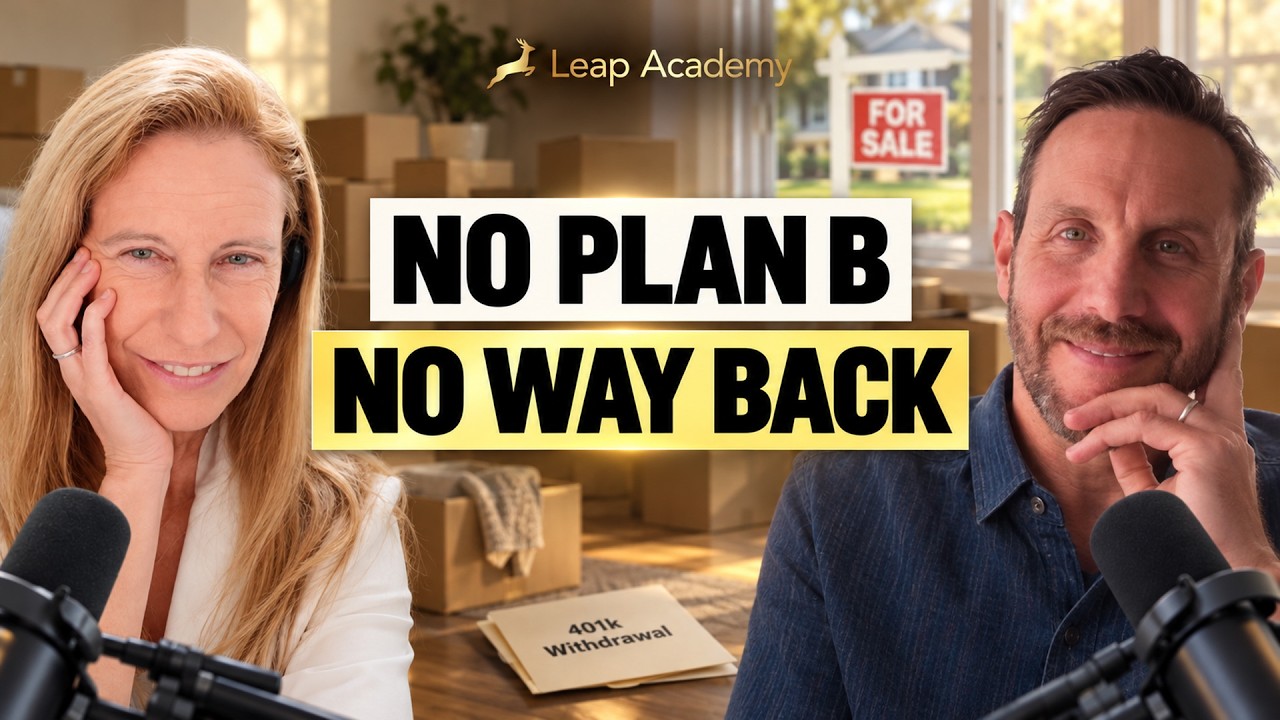
EPISODE #
178
In this episode...
Take the free 90-second Leap Scorecard built from this episode Answer 7 questions about your next career leap, see where you stand, and get 3 practical moves based on your answers. |
For Ethan Brown, founder and CEO of Beyond Meat, that moment came while working in clean energy at the Department of Energy. He was solving real problems, had credentials, status, and respect. But sitting in meetings about renewable energy while scientists were spending billions on lithium ion batteries and fuel cells, something didn't add up.
The math showed that the food system was producing twice the greenhouse gas emissions as transportation. Yet nobody was examining it seriously. A childhood around a family farm and animals had already shaped how he thought about food, and he began asking what would happen if the science and investment going into clean energy were pointed at reinventing meat.
That's when everything changed. He decided to leave it all behind and start Beyond Meat in 2009.
The Decision to Start From Zero
Here's what most people don't realize about starting over: it's not just about changing jobs. It's about becoming comfortable with starting from zero, especially when you've built an identity around your title.
Ethan had formal training in energy and a career built on it. Going into food felt odd given where he came from, and the social side stung. A friend called to ask, "So how's the tofu factory going?" Even that stung. But the alternative, he realized, was worse: looking back on his life and saying he'd had something he cared deeply about and didn't do it.
The Risk Nobody Talks About
Starting Beyond Meat meant:
Selling his house to fund the company in the early days
Pulling everything out of his 401k and paying the penalty because he couldn't put it back
Borrowing from high-interest lenders, far more casual than a bank, to keep operations running
Having his credit card rejected in a hotel while pitching Bill Gates, the wealthiest man in the world at the time
Calling his aunt to transfer money in when protein was stuck in the Port of Baltimore and he was being fined every day
This wasn't a startup story sanitized for LinkedIn. This was desperation masquerading as optimism. But Ethan had the confidence and conviction to keep going, and once you're this deep in, there is no plan B.
That conviction was what got him through. Not the plan. Not the credentials.
The Hardest Part Wasn't the Money
By 2019, Beyond Meat went public. The company was profitable, growing, everything was moving up and to the right. And then the music stopped. Not gradually. Suddenly.
What Ethan underestimated wasn't the market shift. It was the ability of an incumbent industry to rewrite the narrative entirely. Ethan describes an enormously sophisticated campaign, run by the same kind of people who had done activism against alcohol regulation, calling Beyond Meat's products "fake meat" and "real chemicals." The message appeared everywhere: the Super Bowl, the Wall Street Journal, the Post, the New York Times.
But here's what was happening simultaneously: a Stanford clinical trial showed Beyond Meat products drove down LDL cholesterol. Consumer case studies showed that in 30 days LDL dropped by 27% and signs of inflammation were reduced.
The narrative still dominated.
For a CEO, this is the crucible moment. You have two choices: double down or retreat. Ethan chose not to retreat. Among the things he did:
Made the products even healthier, switching to avocado oil and cutting saturated fat to 75% less than animal protein
Put up a website, the Phytosphere, starting as a test kitchen, to share the superpowers of plants
Goes through the company's principles with his team in "coffee talk," roughly weekly, including "right relationship," which comes from his Quaker tradition
Leading Through Uncertainty
What keeps a CEO sane when expectations are crushing you?
Ethan's answer wasn't revolutionary. It was relational. He leans on his executive team and board, and tries to escalate bad news as much as he can. He exercises twice a day, and eating a plant-based diet gives him a lot of energy. He has faith, literally. In his kitchen, he keeps a verse from Chronicles: "Be strong and courageous."
He also keeps perspective through history. He tells the story of Frederick Tudor, the ice king, who spread a rumor that mechanized ice was contaminated to protect the ice-cutting business. Then the Civil War blockade cut off ice from the northern lakes, mechanized ice started again, and it turned out the contamination was in the lake ice.
The lesson: over a long enough timeline, shenanigans dissipate. You just have to survive long enough to see it.
The Leap Nobody Expected
What made Ethan's decision to leave clean energy different from most career pivots is that he wasn't running from something. He was running toward the biggest problem he could see, even though it meant starting from scratch, taking on serious financial risk, and fighting a battle in public.
The one thing he'd tell his younger self? You have to be risk tolerant as an entrepreneur, but at some point, not taking on so much risk is what he'd advise.
That's the paradox of the leap. You need enough conviction to walk away, and enough to keep going when the world tells you you're wrong.
We go through all of this in the full episode. Watch on YouTube or listen on Apple Podcasts or Spotify.
Take the free 90-second Leap Scorecard built from this episode Answer 7 questions about your next career leap, see where you stand, and get 3 practical moves based on your answers. |


Full transcript (if you like reading instead of listening)
00:00 Ethan Brown
When I went to pitch Bill Gates for the first time, my cards were getting rejected in the hotel because I didn't have the money to pay. Just the sort of strangeness of going to meet with the wealthiest man in the world at the time and having this type of issue going on. But it was all part of the process, and I accepted it as part of the process.
00:15 Ilana Golan
That's Ethan Brown, founder and CEO of Beyond Meat. After leaving a successful career in clean energy, he risked almost everything, including his family's financial security, to build his own company. He worked around the clock and attracted major investors, including Bill Gates, and turned Beyond Meat into one of the most talked about companies in the food industry.
00:38 Ethan Brown
I pulled everything out of my four one K for this and paid the penalty because I couldn't put it back in. Did you take a risk? I mean, you just had to do it.
00:44 Ilana Golan
But as Beyond Meat faced mounting financial pressure, Ethan's conviction was put to the ultimate test. So how do you keep fighting when everything you've built is at risk? In this episode, Ethan shares how to lead through crisis, how to stay resilient under pressure, and how do we invent your business without losing sight of your vision? I will go on.
01:05 Ilana Golan
And this is the Leap Academy podcast. So we've been fans for a long time in my house, but I actually wanted to queue back in time to your family farm, Maryland. Was there a certain moment that you decided to go vegan? Like, was there like a certain situation?
01:26 Ethan Brown
I think it was really over time. And I, I wish I could say that I was someone who had a defining moment and made decision, but it was really throughout my childhood I started to to question what I was doing. And so there were a number of moments that moved me in this direction, and probably one of the biggest ones where I really began to feel like this is something that I wanted to do.
01:47 Ethan Brown
I used to fish a lot, and this is, you know, before the days where we had any kind of technology to keep kids interested. So if I didn't want to do what my folks were doing, it would take me to a place called Whites Pond, and and I would just fish. And I had a canoe and, you know, get lost in your your thoughts there and so on and so forth.
02:05 Ethan Brown
And one day I caught a pickerel. And I didn't want to I was doing Katherine Lees and I didn't, didn't want to take the fish home with me. And there was a couple there said, look, if you don't want, I'll take the fish said, okay. I ended up giving them the fish. They put the stick through the gill and we're walking away with it.
02:22 Ethan Brown
I said, watch this fish struggle. And I was like, I just don't want to do that. I said, can I have the fish back? So I grabbed it back and I was a shy kid, so it was like I was like awkward, you know? I said, can I have the fish back, please? And I just put the fish back in the water.
02:35 Ethan Brown
And that was really, you know, for me, a moment where I started to realize that I was thinking about the rest of life on Earth in a way that wasn't compatible with how I was eating. And so from there, I kind of made changes in my diet, but didn't become fully vegan until I was in my late 20s.
02:51 Ethan Brown
I became vegetarian and then ultimately vegan. But I went, you know, it was it was incoherent. There was sometimes I would not eat certain species and others. It's that journey that a lot of people take.
03:01 Ilana Golan
Hey, before we get back to the conversation, one of the reasons why we make this show is to help you see what might actually be possible for you, and then to know exactly how to take that next step towards your own leap. So if today's conversation inspired you to look at your own leap, we built a free scorecard around this episode so that you can figure out exactly where you are right now and what to focus on next.
03:25 Ilana Golan
So just go to Leap academy.com. That's.
03:32 Ilana Golan
The link is in the show notes. And if you want us to keep hoping you make that leap, follow the show and share this episode with someone who's thinking about their leap right now. Now let's get back to the show. And by the way, is there something in your childhood? I mean, that's a beautiful story. Is there a story in your childhood that you think created the version of Ethan that we see today?
03:55 Ethan Brown
Oh, yeah. I mean, I was very blessed. I love both my currents very much. And they they were went out of their way to to give me a really nice experience growing up. And so we used to go to this farm a lot and we had dairy cows there and it was a my father's professor. And so it was something he did on the side, and there was a place that we would go that was actually up in Maine that was right down the street from not right down the street, but right down the road from E.B. White Spot.
04:20 Ethan Brown
So I think I took a particular interest in Charlotte's Web. And I love animals. I wanted I wanted to be a vet. I, I read everything about James Herriot that I possibly could. I love those books. And I used to trap in almost all the time just to sort of study them. Like I would go into our attic and like at the farm and catch mice and stuff where I lay out in the field, or I would like to put boards down trying to find snakes.
04:43 Ethan Brown
So I just grew up really interested in in the life that was in, in the forest, in the fields. And so that stuck with me. Yeah.
04:50 Ilana Golan
Yeah. That's beautiful. But even though you liked animals, you actually went into your your career started was kind of clean energy in that area, right? Y clean energy. Right. And how did you find out that this is not the impact that you wanted?
05:06 Ethan Brown
Yeah. No. So I loved working in that space. And I began really working on nuclear and then on, on electricity restructuring and trying to restructure the grid to allow for more renewable energy. And then I got into hydrogen and fuel cells. And I think the reason that I was focused on clean energy, thank you for drinking.
05:27 Ethan Brown
That was, was that.
05:30 Ilana Golan
Excellent, by the way?
05:31 Ethan Brown
Thank you. Thank you. So I mentioned my dad's background, and I was a student of his. And I remember thinking about my career and kind of framed the question for me. Said, well, what's the biggest problem in the world, in your view? And I thought about that, and I could be literal sometimes. Am I thinking? And I was thinking about, well, if like the climate is so destabilized, we can't live.
05:51 Ethan Brown
It doesn't matter whether you're a great doctor or a great actor or whatever it is, we have to solve that. So I saw what they probably climates the biggest issue facing us. And I said, well, go organize your career on that. So it made sense for me to go into to clean tech and, and clean energy. And I also was just fascinated by the ability to, to power the world in a more clean way.
06:11 Ilana Golan
And then but something got you to decide that there is some discrepancy between trying to work around clean energy and all the work there, and the problems that you were actually seeing as share more what's happened.
06:26 Ethan Brown
So much of what we do, I think, is framed by an understanding that should be challenged. Right. And I think Keynes was the best on this. In his general theory, he wrote about, I think it was Mad Men and Scribblers where he just said, you know, like most of us think that we're doing is completely rational. But his result of some defunct thinker, you know, that laid out a framework for us.
06:46 Ethan Brown
And so when I was coming out of school, you know, the argument wasn't as still as today that, you know, climate is really being driven by automobiles and transportation and power routes and things like that. Okay, fine. But if you look actually at the math, the food system contributes two times the amount of greenhouse gas, as does transportation.
07:07 Ethan Brown
So here I was, the Department of Energy and, you know, working with various other companies to get grants. And, you know, they were spending billions of dollars on lithium ion batteries and fuel cells and solar and all that. And yet the food system was totally unexamined in a real way. I mean, we would have steak. I mean, I wouldn't have it, but we'd have the steak we brought into these meetings.
07:27 Ethan Brown
Right? Yeah. There's something really unusually wrong about this. And so in terms of just focusing on what matters most. I started thinking a lot about food, and I had exposure because of a farm and all that. And I began to ask myself this question, like, what if all of this investment in science technology were geared toward reinventing meat and not building me substitute, but actually trying to structure something that is meat without the animal it would that make a bigger contribution to what I'm working on now?
07:57 Ethan Brown
And I became convinced over many years that it works.
07:59 Ilana Golan
So let's go there for a second, Ethan, because, you know, the science says that story. But on the other hand, the hardest thing about reinvention in a lot of our listeners, this is what they want. They want to reinvent themselves. They want to figure out what's next and how to find a bigger thing in their life. And one of the hardest thing is the thought that maybe you're starting from scratch, right?
08:21 Ilana Golan
You're going instead of an industry that you know so much about now you're going to words an industry that you kind of don't know it much about, right? So take me to that day when you were actually deciding that this is something that you want to do.
08:34 Ethan Brown
Is daunting, for sure. And I think we have a real advantage today. And I had that advantage somewhat. It's much more prevalent today. But you can teach yourself anything now. Like, that's the crazy thing about being alive today is, you know, I was not I didn't study attrition. But I guarantee you I can go super deep on that topic because I obsess about it and I learn about it, and I surround myself with doctors, and I read and I read and I read and I read.
09:02 Ethan Brown
And today, you know, you know, the thing used to be you had to have library card. You learn something right now, you just get online and you can just become an expert. Right. And so I love to read about things. And so while it was daunting, I knew that if I studied enough, I could figure it out. And and so I would just encourage people to do that.
09:20 Ethan Brown
You know, you don't need the degree. You don't you don't need the credentials if you're willing to absorb yourself and, and marinate in a topic, immerse yourself in it. The name of that drink, you know, you can you can become successful. Yeah, yeah, yeah. And I love the stories of people that do that, right. Like, you know, a lot of the guys in my, my initial journey here, like, didn't have, you know, college degrees.
09:46 Ethan Brown
You know, like about, like, biz Stone was on my board. He founded one of the founders of Twitter at Williams, one of the founders, Twitter Bill Gates. Like, I mean, these were all people that just had a vision and a dream and some intelligence and went and learned it and did it. So I would encourage people to just have confidence.
09:59 Ethan Brown
Yeah.
10:00 Ilana Golan
And that's incredible. But again, there's one thing to have an idea and there's a whole different level of saying, you know what, I don't need that stability. I'm even though whatever you were reporting to a CEO when you left. So theoretically you have the title, you have the status, you know, and suddenly you're starting from scratch. Talk me to to me about that decision.
10:21 Ilana Golan
And also, what did you underestimate when you're starting from scratch, when you suddenly don't have the title because that's daunting to you?
10:28 Ethan Brown
Definitely make a lot of mistakes. You, you have to learn by doing a lot. And, and when you get into practical work, you know, you don't have the same audience that you did in your previous career, right? People sure. Like, what do you know? You know, and so you have to just be excited about it. And, it also helps you look at things anew, you know, it helps you not have the same.
10:51 Ethan Brown
I'll give you an example. When I was just starting the business, I went out to see a very large food company because they wanted to license some technology that I had and I was working on. So sitting in their offices and it was a big building and went up to whatever the eighth floor or which one sitting down there.
11:05 Ethan Brown
And I said, well, how many people do you have working on what they were calling their meat alternative? They said, oh, we have half of food scientists on it. And that was the approach. Right. And so I was almost naive enough to think that you could get a group of, you know, 30 or 40 of the best scientists to work on this problem.
11:23 Ethan Brown
And I think if I started in food, not sure I would have thought that way.
11:27 Ilana Golan
Wow, that's that's fascinating. And I think it did take you also time to marinate between you, you know, when you actually saw the problem until you actually decided to say.
11:39 Ethan Brown
Well, I mean, I wish I didn't, I wish I didn't. I spent a lot of years thinking about it, and I did kind of the rocking chair test at some point. I don't think I formally did this, but I began to think that way, that if I don't do this, I'm going to look back on my life and say, I really had something I cared deeply about.
11:54 Ethan Brown
But whether it was the mortgage or the you know, it was kind of odd to start going into food, given where I was from. Like I had all this formal training and what I was doing. And I remember a friend of mine called me up one day and said, you know, it's been, how's the tofu factory gone? You know, you know, and so sort of like, you know, it's not what I'm working on, but I appreciate it, you know.
12:12 Ethan Brown
But like so there was also sort of a social element like this kind of an odd thing to do. Yeah. Yeah.
12:17 Ilana Golan
Right. Actually let's talk about those early days. So you started, I think in 2009, correct me if I'm wrong and, you know, and again, like those fear of money, those fear of what people think, you know, there's all these things take me there in the very beginning because a lot of our listeners are like, oh, I want I have these ideas, but I'm scared.
12:38 Ilana Golan
Like, I need the stability. I have the family, I have the kids, and you had all of it and you've done it anyway. So I want to go there for a second because that that's the scariest thing.
12:49 Ethan Brown
It is scary. And I think you have to have, at least in my case, I can only speak from my own experience. You have to have a high tolerance for risk. That's important. And I'll talk a little bit about the someone I'm very close to, my chairman, Seth Goldman. You know, to look at his kind of orientation toward life.
13:07 Ethan Brown
He's very optimistic as a person. Right. And you have to have that ingrained optimism, because if you don't have a risk tolerance and you don't have optimism, you just shouldn't be doing this right, because those are the two things you need when you go to battle. And so I really did have both of those. Like, I just I think the third piece is a level of conviction about what you're doing is enormously important.
13:30 Ethan Brown
Like, if I could get you in a room, I would try to convince you that what I'm working on is the most important problem, and that if you would just come help me, we could go do something amazing together. And that, I think, gets you through so much. Because in our case, it's true. Like, I don't have to.
13:45 Ethan Brown
Like, I always think about this Levi's ad that I saw once. We're talking about how Levi's are great for the planet because they last long. Another pair of jeans. I'm like, okay, you know, it's just such a stretch. Yes, that may be slightly true, but like I can say, this truly is a solution to what we're facing, and that's exciting to me.
14:02 Ethan Brown
So I'll be willing to put up with a lot of stuff in order to continue working on that. And I guess I'm doing that today too.
14:09 Ilana Golan
Well, that may talk about the conviction, because that's a huge piece that will carry you through like many years now. But, let's talk about again, early days, hard to get capital. You kind of know what you're doing. You're begging family to give you some money. Like, take me to those early, early days. Like, what does it look like?
14:30 Ethan Brown
It's a lot of moving stuff around. You know, you're you're moving money from one account to another. You're. You know, I like to joke about how when I first started, you know, it was, Oh, you know, hey, Mr. Brown, you know, how can we can we help you today? When I go into a bank, ask for a loan or something?
14:46 Ethan Brown
By the end, it was like, yo, what's up, Ethan? Because I was going to these high interest places, you know, like, much more casual than a bank. And then, you know, it was it was just a lot of, again, like, you have to have faith, confidence, conviction. It was it was a time when I had I think I've told a story before, but where the protein was stuck in the port of Baltimore and I couldn't get it out, and I was being fined every day because a loan that we were expecting to be paid back wasn't.
15:16 Ethan Brown
So I had to call my aunt and get her to transfer money in. Or like when I went to pitch Bill Gates for the first time, my cards were getting rejected in hotel because I didn't have the money to pay. And, you know, just the sort of strangeness of going to meet with who, you know, the wealthiest man in the world at the time and having this type of issue going.
15:32 Ethan Brown
But it was all part of the process, and I accepted it as part of the process. And, you have to have that confidence. And I think part of it, too, is you if you get this deep in like I was, then you don't have a plan B, there's no sort of like, well, if this doesn't work, I'll do this.
15:50 Ethan Brown
And so, you know, the back to the wall thing and being able to really come up with the right ideas. I think those things sometimes go together. Necessity.
15:59 Ilana Golan
Is your wife freaking out at this point or is she's like, Ethan. Like, where is she? I mean, this is scary for everybody in the family, I assume.
16:07 Ethan Brown
Yeah, it is. And there's an element. You know, to be honest, that today she's amazing. You know, she has been incredibly strong and is a, you know, I'm surrounded by a lot of wonderful people, and my wife's right there, so she's been very, very helpful. Very helpful. Yeah.
16:27 Ilana Golan
Incredible. And.
16:28 Ethan Brown
You know, not without fear for sure. I mean, there's a lot of, Yeah. Yeah.
16:35 Ilana Golan
Because I think you also sold your house for this somehow.
16:38 Ethan Brown
Or that we thought we. Yes we did. We sold the house that we were kids were that we first did our kids and stuff like that and and, yeah. I mean, we just completely put yourself all in financially, for sure. You, like, always say I'm not gonna like. I tell fidelity when I met with them for the IPO that that they were, like among the first investor because I pulled everything out of my mind for one k for this and, you know, and paid the penalty because I couldn't put it back in and stuff like that.
17:02 Ethan Brown
So you just did you take risk? I mean, you just had to do it like it's just part of the process.
17:07 Ilana Golan
Oh my God. I mean, but that's the level of conviction you had like that carry you through all this risk. And let's share that story with Bill Gates. Like how did you get him to invest? It's a beautiful story. Let's go there for a second.
17:20 Ethan Brown
It was fun. Like, I, I brought a wonderful chef with me. Still friends today. Still friends today. Dave Anderson. And, he couldn't find a place to cook in the area where we're meeting.
17:32 Ilana Golan
Wait before that. How did you get even get Bill Gates to respond? Like, how did you even, like. Yeah. Get me there. Yeah.
17:39 Ethan Brown
Oh, man. It's it's through someone who still on my board today. Ray Lane, who was the president of Oracle at the time or was his early in his career. And he's been an amazing mentor to me. So Kleiner was the first institutional investor that I had. And that decision was was easy. It was I was between them and one other firm.
17:58 Ethan Brown
And I did everything you always do. I sent a bunch of emails. No one answered all of this stuff. And the title of my email at the time is this pretest was this is a Prius for the plate because people were investing in climate, right? And decided to get nothing back. But finally I did get in touch with Kleiner, and he was the senior, partner there.
18:17 Ethan Brown
And then a guy named Momo was a junior partner. And so as part of that, I called a friend of mine, Rahul, who had dealt with Ford. I said, should I take this from them? He said, look, even if you fail, it's a good decision to take it because the network they'll expose you to is so significant. Right.
18:32 Ethan Brown
And so I said, okay, I'll do it. So I did it and they did everything they said they were going to do. Like so that was one of the first introduction to me was Bill. And and so I went and met with him and he was great. But but the way that I was prepped for it was this guy was going to ask you some crazy, arcane mathematical thing that you're going to have to figure out.
18:49 Ethan Brown
And, you know, you know, the reference and said, just get ready. So I studied the studying, study, study, study, study got there. We ate a great meal together. He wanted to talk primarily about his children and the world and all that stuff. And I thank God because when I got there, there were two guys coming out of the office with like, rumbled suits, and I was like, I'm going to just get killed.
19:08 Ethan Brown
But it wasn't great. So and he's been great.
19:11 Ilana Golan
But wait, you you let him taste your your.
19:13 Ethan Brown
Yeah, yeah, we cooked it and cooked everything for him. And yeah, we ended up doing that several times throughout his involvement. And he's got a great staff and and he's been very helpful. Yeah.
19:22 Ilana Golan
And he literally wrote about it in his blog, which is huge.
19:27 Ethan Brown
Yeah.
19:28 Ilana Golan
That's amazing.
19:29 Ethan Brown
He's right. I mean, there's no there's no way to solve what we're doing right now without a solution like this. So it made sense to me that he would be interested.
19:36 Ilana Golan
Hey, here's something I hear a lot. Hey, I see other people landing speaking opportunities, advisory roles, board seats, and I don't know how they're getting them. In my free training, I show you why grinding harder and paying for polished resume keeps even top performers completely invisible, and how leaders today build executive reputation that pulls these opportunities towards them.
19:58 Ilana Golan
If you want to be the person those doors open to head to Leap academy.com/training, this is more important today than ever. So go to sleep academy.com/training. It's also in the show notes. Now back to the show. Okay so you had a you know like years of like huge hype. I mean, you worked with world class athletes and investors and ambassadors.
20:23 Ilana Golan
I mean, that was like incredible to watch. And then you iPod in 2019. What would you say? First of all, you're most proud of was this like was what happened? And what are some of the mistakes that you think you would kind of point to the years?
20:38 Ethan Brown
I think that the pride thing comes in with, I have a group of people around me, including one who's sitting in this room, who are so committed to what we're doing and so talented, that I'm so confident that we're going to to finish the job. And I think that job is really to help people eat in a way that's healthy for them, better for the planet.
21:01 Ethan Brown
When I hear stories about people that have been able to do that because of our food, that is my proudest moment, because our food choices and our lifestyle are the deadliest part of our life, right? I mean, they are the thing that is, the food choices are so significant as a driver of mortality. So if I can help people to change that trajectory, that's what I'm most proud of in terms of the mistakes I made, a ton of them, they're sort of their big ones that I look back and one of them was taking on convertible debt.
21:33 Ethan Brown
I should have just taken it as equity. At the time it was our valuation was super high, just for a lot of reasons. We didn't do that. And I looked back, and that has been a Achilles heel for for many, many years. And as we, you know, restart and and rebirth the company, it's painful to get through all of that.
21:52 Ethan Brown
And we were almost done. Right. We're almost through all of it. But but it has created an overhang and an enormous distraction because as you're trying to operate the business, you also have to deal with your cap table and you have to deal with a huge number of interest in your cap table and convertible debt holders and things like that.
22:10 Ethan Brown
So that was an area where I think I could have done better.
22:13 Ilana Golan
Maybe before you continue can if somebody doesn't understand convertible debt, can you just like explain it, dumb it down for a second or I can help, but, you know, can we dumb it down just for a second? Like, what does it actually physically mean? It means that you need to pay back this debt. And that takes a huge effort right from the company.
22:33 Ilana Golan
Is that.
22:34 Ethan Brown
Yeah. And it can and it can convert to equity at a certain valuation. But if that if you start to go south, you just have to pay it back by it back. And then you have to work out a deal. Right. And if you raise it at a very high level, and then your company is also more worth a lot less, it's very dear to pay it back in equity.
22:52 Ethan Brown
Right. And so it's a challenge, but I think the other ones were fundamentally when something like this is happening to a company where history seems to be moving in that direction very, very quickly and you were at the forefront would take I today. Right. And it is an arms race, you know, and you have a group of shareholders and they want to win and you want to win.
23:18 Ethan Brown
And it looks like this is inevitable, right? You've got McDonald's, Pepsi, you know, Taco Bell, KFC, you know subway. You got everybody using the product and wanted to go, go, go. And you have a competitor and impossible. And they're spending a ton into you're going to spend a ton and you're just racing. And then the music stops.
23:40 Ethan Brown
But you can't tell right away why the music is stopping, right? You can't sort of all these different variables. At the time we thought it was Covid, it was just unclear. Or was it just temporary what was going on. Right. And so I think in retrospect, the obvious mistake was, you know, we should have just gone back into the harbor.
23:58 Ethan Brown
And so what? We just got to wait this out. Right. But you don't think that way at the time, because when you're under a lot of pressure to keep it going, your last 3 or 4 years suggest to you that the next two are going to be the same. Yeah. And so it's hard to see that in the sort of fog of war.
24:14 Ethan Brown
And so I wish I'd had the buoyancy to, to kind of see that. I think the last thing is I underestimated the, I knew that the, the meat industry, that livestock industry was going to be an issue for us. I didn't know they would be as successful as they were at redefining the narrative. And so, you know, we went from being something that could really help you with human health and really help you environment.
24:41 Ethan Brown
And of course, take animals off the plate, which a lot of people want, and to being what they would call fake meat, real chemicals in their campaign. And they launched an enormously sophisticated campaign. I mean, it was brilliant how they did it. I mean, they just they used the same people that had done sort of anti legislation had done, you know, activism against alcohol regulation.
25:05 Ethan Brown
There's a group in DC that they hired called center for Consumer Freedom, and they paid them to come up these campaigns. And then you saw it all over the internet. You sold on Super Bowl, you saw on the Wall Street Journal and Post New York Times just as constant, constant, constant refrain of hyper. You know, they called ultra processed, full of chemicals.
25:24 Ethan Brown
And so at the time that that was happening, what was fascinating was we were seeing these opposite results. And so there was a version and version of science. We did a Stanford study where we drove down in a clinical trial. We drove down LDL cholesterol. We drove down male, which is compound in the gut associated with heart disease.
25:42 Ethan Brown
Then we started doing things with consumers. We do these tests with the consumers as case studies, where just in 30 days we were able to lower LDL cholesterol by 27%, we were able to affect weight loss. We were able to reduce signs of inflammation in the body, all these amazing things. And it was really beyond plus a whole plant based diet.
26:02 Ethan Brown
The combination of those two drove these incredible results, but that didn't matter because the marketing was so strong against us, and I underestimated the ability for them to change the narrative.
26:11 Ilana Golan
Right. And for those listening and correct me if I'm wrong, Ethan, but somewhere around up until roughly the IPO, right, 2019, it was all basically this is changing the world. This is healthier. This is amazing. You know, like we shouldn't eat that much meat. It was, you know, and then something tilted and like you said the the you know, transportation, the car industry, all of this like basically we're able to change the narrative or I meant the meat industry.
26:42 Ilana Golan
Sorry to change the narrative. You know, like change the narrative and basically say, this is actually not healthy. It's super processed. Don't do it. Right. So and and there was like this tilt that and again, we were already like, you know, Beyond Meat fans. And by then we were or you know, we knew about you guys and we were eating again.
27:03 Ilana Golan
And and suddenly you see this narrative, which. Yeah. So, so how do you cope with that as a CEO also because I think, you know, part of on one hand you want to adapt to what is needed. On the other hand, you know, you can't experiment too fast because you drive everybody nuts. And like, how do you cope as a CEO?
27:25 Ilana Golan
Sorry. Because like, we are all coping with things like this right now. So you're right.
27:30 Ethan Brown
It was it was challenging. And I think, you know, we did a couple of things. One, we wanted to try to change. We wanted to fight the narrative. Right. So we did a lot of things to try to correct a narrative. But the problem is the tsunami was just so strong, right? So anything we did was just being knocked out by that.
27:50 Ethan Brown
But one thing we did do is say, okay, how do we get stronger as a result of this? And so we sort of looked inward and said, we really want to make sure that there's absolutely nothing in our products that anyone can criticize. Right. And so we had this five year program of Stanford. We worked extensively with their medical school and, you know, and all that stuff.
28:07 Ethan Brown
I think we did things like we decided to start using avocado oil because it was even healthier, right? Heart healthy avocado oil. And we reduced the saturated fat. So it's now 75% less than animal protein and the Beyond Burger Beyond beef, all the other stuff. So we just tried to say make it, you know, completely bulletproof in terms of, in terms of the health claims.
28:25 Ethan Brown
So we're now, though, living in this world where avocado oil mixed with fava beans and lentil, lentil protein, fiber, protein and protein is somehow seen as less healthy than, you know, than animal protein. Right. And so we just have to wait, get through it. And that's part of the reason I've lost these adjacencies is to get through this period.
28:44 Ethan Brown
I think today, if you're sitting today as a as a person who consumes scientific data and says, I'm interested in learning how the world works, you have to set aside three really important boxes of information. The first is that, you know, you put more carbon and methane into the air. Earth's going to get warmer. And this is not a political thing.
29:04 Ethan Brown
And we've known this since, you know, 1896. I think it was one of the first observations that was built in 30 years before. But there's a guy named savant, a religious who was looking at a coal factory, a fact who's using coal and seeing all the emissions and saying, well, that's, you know, letting carbon into the air.
29:21 Ethan Brown
That's got to be more money doing this calculation. You got a very, very close to what actually happens. So you have that going on in climate and you say, okay, well we know that food is driving a huge percentage of that. We're going to ignore it. We're going to act like it doesn't matter. So that's the first box of information you have to know.
29:37 Ethan Brown
Then you come to nutrition and you know, there's the data is right in front of us. You look at Okinawa, you look at the the blue zones. And Okinawa was one of the longest live populations of the world. 96% of their diet is animal free. Right. And then you go to say, okay, what about seven day Adventists here in the United States surrounded by all the food that we all eat?
29:56 Ethan Brown
But they're living longer than everybody else. What are they doing? Right. And so their diet is 100% or 99% animal free, right, depending on which cabinets you're talking to. They're living many, many years along. And everybody else see the data is there. Then you have studies like we've done the swap meet. You have these things where I can say in 30 days, I can get you to drop your cholesterol by almost 30%.
30:19 Ethan Brown
That's the same as a statin, right? So you have to set all of that data set. Third one is a sentience question I think up until 1859. Believe what you want, but Darwin publishes gorge and species. Right. And makes the proper case that we evolve from animals. Right. And so this terrific philosopher, he's passed on now, but his name was James, Rachel and all the places he could be studying or working at University Alabama.
30:47 Ethan Brown
He writes a book called created from animals as basically ethics, as if you believe dollars. And it says, look, our cries are their cries. Their pain is our pain because our central nervous systems are the same, right? Because we see the world in much the same way. So you have to set aside that box too. So we live in a world where our choices are being defined in a sort of, or being made in a scientific or historical way.
31:19 Ethan Brown
And I think part of our job as adults is to help people not do that.
31:23 Ilana Golan
And I hear your conviction and I and and this probably like answers some of my question next. Right. Because again, it's much easier to run a company when it's doing well. Right. Cash isn't like everybody loves you. Like, you know like it's it's much easier. But then, you know, when expectations are huge and then the market changes. It's incredibly hard to keep everybody motivated, keep them working hard like, you know, and keeping yourself sane in the in the journey.
31:54 Ilana Golan
Talk to me a little bit. As a CEO, I know there's a lot of CEOs right now listening to the show and or leaders and various capacities and with AI and everything, there's a ton of unknowns and they're like, I don't know how to motivate my team. People are leaving, people are laid off. Like, how do I keep the the theme going?
32:14 Ilana Golan
And without, you know, now losing the team as well. So walk me through this a little bit, Ethan.
32:20 Ethan Brown
I think it's a look. It's a bit. If I give a very honest answer, it's very difficult. But I think what what you do is, is you wrap your arms around the people that really are helping you get through it. And, and we have this thing called coffee talk, where we go through the principles of the company. Every time we do it, we try to do it once a week, but because of travel stuff, it's often not once a week.
32:41 Ethan Brown
But we have a list of principles when go through them. And there are things like accountability. All the things you spent. The last one is called right Relationship. And the idea is that it's I'm Quaker and it's from the Quaker tradition of being in right relationship with what your God is, with your neighbor, with your friend or whatever, but also your colleague.
33:02 Ethan Brown
And I can be a hard driver on myself, on others. But I always try to keep in mind that person may have come in, and they may have had a tough morning with their spouse or their child or whatever. So you try to relate to people in that regard, right? And I think if you instill that throughout the company that you, you, you know, it's okay to, to to be a high, you know, driving hard driving person on it.
33:23 Ethan Brown
But keep, keep respect at the forefront of how you deal with people. Make sure it's a nice place to come into. And so you got to do that and then you have to keep this vision out in front of people. But one thing it helps me is when I pick up a glass and there's ice in it.
33:36 Ethan Brown
This really helps me. I'll tell you what. And it's having a sense of history. So I've told this story before, so just cut me off if you've heard it. But in the sort of early 1800s, there was an ice industry in Maine and Boston and all the stuff, and there was an ice king called Tudor, and they were making a lot of money cutting ice out of lakes, sending it down south.
33:54 Ethan Brown
Right. And they sent as far as India. They put it on a boat, put ice to put up sawdust on it, put it in the hull and send it out there. And it would cool the aristocracy on the trains. And, and so someone in January, a doctor in, in Florida started to make mechanized ice to cool his yellow fever patients in his clinic.
34:14 Ethan Brown
And he said, well, I can sell this. So he started selling this mechanized ice. And Frederick Tudor says, not going to happen. He says, we got a good association together. He gets association of all the ice cutters together. And he says, we got to stop this. So he ends up spreading a rumor that that ISIS contaminated. And it's not pure, it's not godlike, it's not pure, it's fake.
34:35 Ethan Brown
Right. So you get you get where I'm going with this. And, it killed the automated, killed the mechanized ice industry, the artificial ice entry. The guy dies, the entrepreneur civil war starts. You can't get ice from these rivers and these lakes down into the south because the blockade. So someone in Louisiana smell goes in. One of these units starts making it again.
34:56 Ethan Brown
And as there bush is like, I need ice for beer. So they start buying ice and it takes off again. Now it turns out there was contamination, but it was in the ice from the lakes around Boston. So the is perfect for us, right? There's heavy contamination in animal protein. We're seeing it right now with all these imports and the controversy around that.
35:15 Ethan Brown
We run the cleanest process you could possibly run. I mean, it's just we go and go to these amazing farmers, North Dakota, Montana, they're growing. Our crops are going to be growing. Lentils force, they're going peas. I can go and I can talk with them and I can look at the soil. And this soil is something really into happening.
35:31 Ethan Brown
The nitrogen is being taken out of the atmosphere and put it in the soil is a natural fertilizer. And legumes do that. So legumes put a little nodule, take the nitrogen out of the air. They fix it into the soil. So it's a nitrogen fixing crop that allows them to use less fertilizer, which means that they can make more money per acre.
35:49 Ethan Brown
So they love growing for us. You wouldn't know that from this sort of big ag campaign against us, right? That we're actually improving the livelihoods of farmers in the Midwest, right. And that they love growing for beyond. So we have to get all of that across and change our narrative yet again. Yeah.
36:08 Ilana Golan
And that's incredible. And I think Ethan like to some extent, if somebody is listening and trying to figure this out, like to some extent that food is going to be processed anyway, it can be processed by an animal or it can be processed in a lab. But the bottom line and now you don't have to kill an animal to get the same process right.
36:27 Ilana Golan
Am I like dumbing it down? Okay.
36:29 Ethan Brown
And it's actually clean. So here's the thing. So like I just thought of houses for a lot of different reasons. It's not a clean place. Feces, blood. There's often not to dip the carcass and various chemicals to get off the the all these things. Right. Tough tough stuff. Our process. You can come any time you knock on our door.
36:49 Ethan Brown
I'll give you a tour. I'd give anybody a tour. Right. It is a beautiful, clean process. And it starts with the plant and it's very simple. The plant is milled and it's putting the the powder is put in an air chamber. And because starch and protein are different sizes, they naturally separate. We take the protein, we run it through heating, cooling and pressure on the same type of equipment used for pasta.
37:09 Ethan Brown
That's what forms the muscle structure, and that's when it's in the flavor. So it's super, super clean. But obviously it's being characterized in a different way. But I think that'll change over time.
37:17 Ilana Golan
And that's incredible. So tell me, Ethan was there like a week or days that you're sitting there and and trying to figure out how on earth do I continue? Is there like those hard moments that I, at least as a CEO, like we have some of these, but, you know, those are like these hard moments that you're like, Holy crap.
37:37 Ilana Golan
Like, how do I keep on one step after the other? Walk me through this for a second.
37:44 Ethan Brown
Yeah. We fought so much of this battle in public. You look, I don't you go private. Okay? Well, I mean, we could try, but part of this whole exercise is to finish what we started and to not retreat, and to show that we're not going to bow down and simply exit stage left, because there's an industry that's more powerful than us.
38:09 Ethan Brown
Right. And so part of it is that sort of stubbornness and wanting to continue. Right. The other is the mission, right? And then the other is I see how many people are depending on us, you know, I mean, this company, the people who work here, people given so many years of their lives. And so you just it's you got to get stronger.
38:28 Ethan Brown
You gotta you got to get a lot stronger. It's interesting. You know, the thing, just to go back a second on the, the question of our process, one of the sectors that was against what we were doing and was very vocal and criticizing us was the pharmaceutical industry. I just found that super interesting. We went and got the records and all this stuff is going to go to Lanco.
38:48 Ethan Brown
The reason that their CEO was so vocal against us, Fake me told us all this stuff because they sell antibiotics to livestock and if there's no livestock, there's no antibiotic sales. So that should just give the consumer some sense of why all this happened. Right.
39:05 Ilana Golan
That's so bad.
39:06 Ethan Brown
Yeah. And if our process used antibiotics, that wouldn't be a problem. But we don't. We are cleaner. Yeah. So it's interesting.
39:13 Ilana Golan
Wow. That that's that's that's crazy. So you have all these things going. You're coming your way. I guess the the bad sort of bad press, right? Like in the false acquisition and, and the stock prices. And first of all, did you ever feel that you shouldn't have gone public or was that not a like, not a thought?
39:36 Ethan Brown
I mean, retrospect isn't very difficult for sure. And it's in a huge distraction.
39:43 Ilana Golan
And maybe just for those listening, I'll just stop you for a second. The difference between if you stay private as a private, a lot of your numbers are private. Nobody needs to know. Like there's a lot of, it's easier in terms of regulations and boards and all the things. And once you go public, you know, for those who are missing and Ethan, feel free to, you know, chime in once you go public, like, everybody knows everything sort of.
40:07 Ilana Golan
Right. Like they have your numbers, they're public. They can see it. It's like the stocks goes up, the stock goes down like the board. There's a time regulations is just a lot more visible. But also there's a lot more regulations around every little step. Am I dumbing it down correctly.
40:25 Ethan Brown
Yeah. No that's fair. No that's absolutely right. And it does make it it gives you a host like if your goal is to, you know, sort of to cut off X, let's cut your operating spends, get to EBITDA positive as quick as you can. When you're public, you have this set of expenses that aren't necessarily helping you drive the top line or increase profitability.
40:46 Ethan Brown
They're just there. And then you have the plaintiffs who are coming in on top suing you for all sorts of ridiculous things. So you have lawsuit expenses, right? And then you have short sellers who are helping to generate negative information. So you have all these things that are just you sort of expose yourself to the public and all the craziness, right?
41:03 Ethan Brown
So being private, you have much more opportunity to say, you know what that moment I was talking about before where I'm just going to pull my boat into the harbor and wait this out. You feel much less pressure as a private companies if I got it. But but when you're public, you got all this other stuff going on, so it isn't for the faint of heart.
41:19 Ethan Brown
It would be easier, I think, to turn this around if it were private. And but I think we are where we are. And, and so just you have to sort of weather the quarters of that, that, you know, you're not going to have, you know, results. But you do know you're doing the right thing for the business.
41:35 Ethan Brown
You do know that you're cutting costs, that you're diversifying your revenue streams, you're working on your margin. You're doing all these things that help you create a better operating result. But it's yeah, I mean, it's all the things I say about the market are true. There's no patience whatsoever.
41:50 Ilana Golan
So take me back to Ethan. Like, did you need to change as a CEO between running a company before two, 2019, let's say, and running a company now that you're kind of like, who is Ethan? Did you need to change? Did you need to I somehow build your mental place better or, you know, your leadership skills, what needed to change?
42:13 Ethan Brown
It's a great question. It's confusing in some sense, because when we when we went public, we were, you know, right after that we were profitable, we were growing, you know, and sort of things were just up into the right and just an amazing way. And so and I didn't have there wasn't much of a honeymoon like, you know, it kind of crashing down after that.
42:32 Ethan Brown
But so I think, you know, leadership, they say this, I'm sure you've heard this. It's it's you take interest and exude confidence, you know? So when you are leading something like this and all of a sudden there's all these challenges coming at you, you you have to learn to do that. I'm naturally an optimistic person. And I don't shy away from challenges, so I think it's okay.
42:56 Ethan Brown
But that part of my personality has had to do more work than it typically would want to.
43:01 Ilana Golan
Do you feel something helps you, like if somebody is going through the same thing or they're battling their own companies challenges, what are some things that help you? Is it is there something that helps you? Someone like.
43:16 Ethan Brown
I have a group of people around me, my my executive team, but also my board. And, you know, they're a very complex group of people. And I don't ask them to say, hold on, let me get this. I got this right. Like, it's more like I realize that I need to pull on them for help. And so I bow them directly when I can.
43:36 Ethan Brown
I lay out the problems to try to escalate bad news as much as I can. Good. All these principles, I think, really matter. You know, when you just try to solve it yourself and then report only good news, that can generally just go wrong? Yeah. So that helps a lot. Your habits help a ton. Like I access twice a day.
43:55 Ethan Brown
I get a very early and I go for a long. I just do something outside, I exercise, and then in the afternoon, I take a very quick break and just do a half hour and. And then just eating like I died helps me. Tongue is giving me ton of energy, you know? It's like it's, it's it really does.
44:15 Ethan Brown
I mean, it's amazing. And then faith, you know, if I have in my kitchen, I was a, you know, be strong and courageous, you know, from Chronicles, because I believe that.
44:26 Ilana Golan
It's beautiful. Well, thank you for going there with me, Ethan. And and one of the things that I love about the company is that you're not afraid of always looking at kind of what are the trends, what else? You should jump on. And, you know, now, you know, it's like there's this whole protein trend, and you guys totally jumped on on that.
44:48 Ilana Golan
As far as you know, I can see. And just adapting to it, you sent me some super yummy things. So thank you for that. So what hopes you adapt this way and how do you experiment. Because it's really hard to experiment when there's, you know, you actually need to create drinks or protein powder or a steak or, you know, or not really a steak or like, you know, like a vegan steak.
45:15 Ilana Golan
Sorry. You know, but how do you how do you experiment? Because you don't really know what's going to work. And, you know, like, you don't want to create tons of them, like walk me through the process for you.
45:27 Ethan Brown
So I love a guy named Edwin Land who was the founder of the Polaroid. And, the book that I think is the best book about him is insisting on the impossible. And his idea is don't do something that others can do, like just just try to create something that the world desperately needs and go do it right.
45:47 Ethan Brown
And so if I have all these smart researchers around me, or far smarter than me and are able to do these amazing things, I want to put them on tasks that are going to be helpful to the world and, and really create a new product that people can use. And in a way that's interesting. And so the steak fully you mentioned is interesting.
46:06 Ethan Brown
And just very quickly, like I actually like you call it steak because in my mind that's what it is in a sense of amino acid lipids, trace minerals, vitamins and water. And you know, I understand why, you know, the Sioux and the Dakota. You know, they hunted buffalo because that was the aggregator of all that energy and all that grass, and the aggregator of all the protein and nutrients in that grass.
46:26 Ethan Brown
We now have a machine that can do that. Right. And and so that's all we're doing is we're creating the same structure out of, out of plants directly. But so trying to figure out what to innovate around, what, what does the world need. And so in this case, and you know what one funny thing about being an innovation is I'm watching drink.
46:46 Ethan Brown
I love you drinking, but I have a better one here in my office that we just developed. And I, I just pains me to see you drinking the old one. Like, I cannot wait to get you the new money.
46:55 Ilana Golan
Send me. Yeah.
46:56 Ethan Brown
No. It's awesome. It's. I will send it to you. It's just even better. And, And so. And I love that of an innovation. And so I think one thing that's happening is that this whole movement around animal protein and it's just like, climate doesn't matter. It's ignoring all kinds of judicial advice. I worked with a guy for years at Stanford, Christopher Gardner, ahead of their nutrition program.
47:18 Ethan Brown
He actually served on the committee for the, you know, dietary guidelines that came out. And he wrote after he came back, said, my recommendation ignored. Right. So we have a crisis that people are eating so much in protein. It's heart disease, cancer. So if you look even at at menstruation, girls are menstruating earlier and earlier, every generation that goes on now.
47:39 Ethan Brown
And one of the hypothesis is that there's too much animal protein being consumed by young people. Therefore the IDF won in their bodies or is being, you know, basically stimulated too much. And so they're maturing much too early now. Okay. Whatever. Right. But that leads to higher incidence of breast cancer or harms of diabetes later in life. Right.
48:00 Ethan Brown
So we have this crisis going on, this inversion of science. Right. One of the things that's happening is everyone's using wave protein all the time. Right. Like way proteins in everything. The you know, the supply chain is taxed. So we said, okay, we're going to do a drink. We're not going to use away protein okay. That sound easy.
48:17 Ethan Brown
Not so much because plant protein has a natural bitterness to it. Right. Whereas wave protein for babies drinking it baby a calf is soluble. All these other things. Right. So we had to spend a lot of time trying to figure out how to not have to be a super good or drink, right, but also keep it all natural, right?
48:35 Ethan Brown
Because our whole thesis is if we're going to go to another area, we have to show how incredibly clean we are. And the thing I love about these drinks is if you turn around and read the ingredient list, you will not see fillers gums, you will not see artificial sugar, you will not see any of that. But I'll ask you to do the same thing with like a core power again from the industry that has attacked a so, so aggressively.
48:59 Ethan Brown
And you'll see things like sucralose, you'll see things like fillers, you'll see all these gums that are being used, and if we use them, we would be killed. So I want to use this as a poster for saying, if you get something from beyond, it's going to be super clean. Creating these drinks, giving people five grams of fiber.
49:16 Ethan Brown
Here's the other fact about fiber is that they looked at feces from the Paleolithic era. People say, oh, paleo diet. They had 100g of fiber in their diet. Based on the fecal samples able to test 100g Americans. Now, I think average American and male supposed to have 28. Supposed to. It's way too little. I think they get like 16g of fiber.
49:38 Ethan Brown
So the the the systems, the digestive, since we evolved and were used to 100g of fiber because we're eating plants and leaves and all the other things, now we're down to 16 a day. We wonder why we have so much colon cancer, right? So the facts are there. We just have to listen.
49:52 Ilana Golan
That's incredible. But and and Ethan and again I think this is super yummy. But but take me there for a second. Like, I want to take you back for a second. How? In the food industry. How do you and I, I assume you consider yourself food industry somehow, but. Okay, so in the food industry. How do you experiment with something like how do you like in software?
50:17 Ilana Golan
You can just put some website and, you know, hope that, you know, see traction. You can, you know, like you can put an ad and see if people click. Like there's different ways to experiment and see people love it. Like in the food industry. Like how do you create whether it's a sample or like how do you create a small thing to say?
50:37 Ilana Golan
You know what? I think there's like there's a reason for me to manufacture a bunch of these now. Like, how does that work?
50:43 Ethan Brown
It's a little messy, but I think what we decided to do was to sort of steal a page a little bit from the sector you just referenced, which is we put up a website. First we call called a test kitchen. Now it's a plant protein. We call it the Phytosphere. The Phytosphere is a vision about a world where we can make accessible these superpowers of plants.
51:03 Ethan Brown
And so, you know, I talked a little about this, the beginning. But like, if you some of the reason we can drive such great outcomes is, for example, in our power, if we put plants in our powders and we put polyphenols in our powders, extracts with polyphenols, the plant sterols compete with cholesterol in your gut for basically a little carrier that takes it out of the gut and into into your bloodstream, and it blocks a cluster going into that carrier, the cholesterol then is absorbed and exited from your body when you go to the bathroom.
51:34 Ethan Brown
And so it allows for your body to then draw more cholesterol out of your bloodstream and get it out of your body. Right. And so it's a way of basically combating cholesterol. And if you take like two, two grams a day, it can drop, I think, by 10% your cholesterol levels. And then there's there's beta glucan, which is a fiber you can put into your gut through any lots of different types of food.
51:54 Ethan Brown
We use it in our powders, we use psyllium husk and some of our Senator Play products, and that binds up the cholesterol and takes out your body. So there are all these different super powers and plants that if you take enough of them, you start to generate these benefits. And so we've designed this website where we have some in the center of the plate, we have some in the drinks, we have some in the powders and we have some in the bars.
52:15 Ethan Brown
And the combination of those get you back to meaningful levels. And we're going to keep iterating on that theme. But we didn't launch it at Kroger or at Walmart or anything else. We said we're going to do a test. And consumers who participate all along, so they get to build our products with us. They order them, you know, we make sure they're good before we release them, but we know that they're betas, and then they give us the feedback and then we get better.
52:36 Ethan Brown
So we're in like our third or fourth iteration of this that we'll keep iterating until it's absolutely perfect.
52:41 Ilana Golan
Oh, thank you for sharing. This is super interesting I love that. So maybe last question, Ethan, based on what you know today, if you would take, you know, talk kind of to your younger self, what would you say to yourself?
52:56 Ethan Brown
You know, you have to be risk tolerant to do what what we do as entrepreneurs. But at some point, you know, not taking on so much risk is what I would tell my younger self, could you have to work through it? And it just it just puts pressure on you. But, you know, that was what I would tell myself.
53:11 Ilana Golan
Yeah, you need to be much crazier than you expected to be.
53:16 Ethan Brown
Yeah, exactly. Yes. 100%. Yes. Yeah yeah yeah. Yeah yeah.
53:22 Ilana Golan
Amazing. Ethan. So what else should they know where to find you or. I mean, obviously, you know, beyond. But what what else should they know?
53:32 Ethan Brown
You know, I just think that, over a long enough period of time, the kind of shenanigans that we went through with, you know, is this good for you or not? Those dissipate. And so we have to just survive in advance. Like, that's what I always say to the company, survive in advance. Because over time, I think the truth does show up.
53:55 Ethan Brown
And, and so we just have to be here to make sure that we're able to capitalize on that because it's so powerful, the ability to change lives, to stop you from dying, or really the last piece is on the climate. And I know people don't talk about the climate right now, but the fundamental solution for the climate is to allow plants to get back to work.
54:16 Ethan Brown
And what plants do. The Earth has a thermostat, right? And, you know, the sun actually is a lot hotter today than it was when it first started. It's about 30% hotter or something like that. And the way the Earth has dealt with that is different. You know, they basically erosion and rocks and observing carbon and depositing in the ocean all these things.
54:33 Ethan Brown
But plants are a big part of regulating temperature. And what we're doing is we're removing all those in the Earth and loading the earth up with whether it's, you know, cattle or fossil fuels or whatever. There's a couple researchers that are doing fascinating work. There's there's one that New York University, Matthew Hayek and a Richie at Oxford, Oswald over at Yale.
54:56 Ethan Brown
And they're doing this work around rewilding as well. And what they're saying is that if you basically shrink the agricultural footprint and you can only do this by going right to protein from plants, you can't keep growing all this livestock. You can allow all of that land we've been using to repopulate with wild plants. They suck so much carbon out of the atmosphere that buys us time to fix climate, right?
55:23 Ethan Brown
And it also stops methane, a lot of methane. Not all of it, of course, but the methane related to livestock. So it buys a lot of time to fix climate. And as you can tell from what's going on, climates really real. And so this food is not only better for your body, it's better for the earth. And it's so exciting.
55:38 Ethan Brown
And I hope people can start to see that I get it.
55:40 Ilana Golan
I love that, Ethan. I love your conviction all throughout. Its beautiful to hear. And yeah, thank you for coming in the show. We'll have everything in the show notes, but if you want to let people know how to find you or you know anything interesting that you wanted them to hear, let me know.
55:59 Ethan Brown
Right. Thank you so much for having me. I really appreciate it.
56:02 Ilana Golan
Hey, I hope you enjoyed the conversation today. If you were to see where you stand on the traits we talked about in the conversation and get your next three moves in order to create your own leap, I created a free scorecard around this episode. Just go to Leap Academy. That's leapacademy.com slash. The link is in the show notes, and if you got something from this episode, follow the show.
56:27 Ilana Golan
Download the next episode when it lands, and share this one with someone who may be thinking about their leap. Thanks for being here. I'll see you next week.